Category: mental health

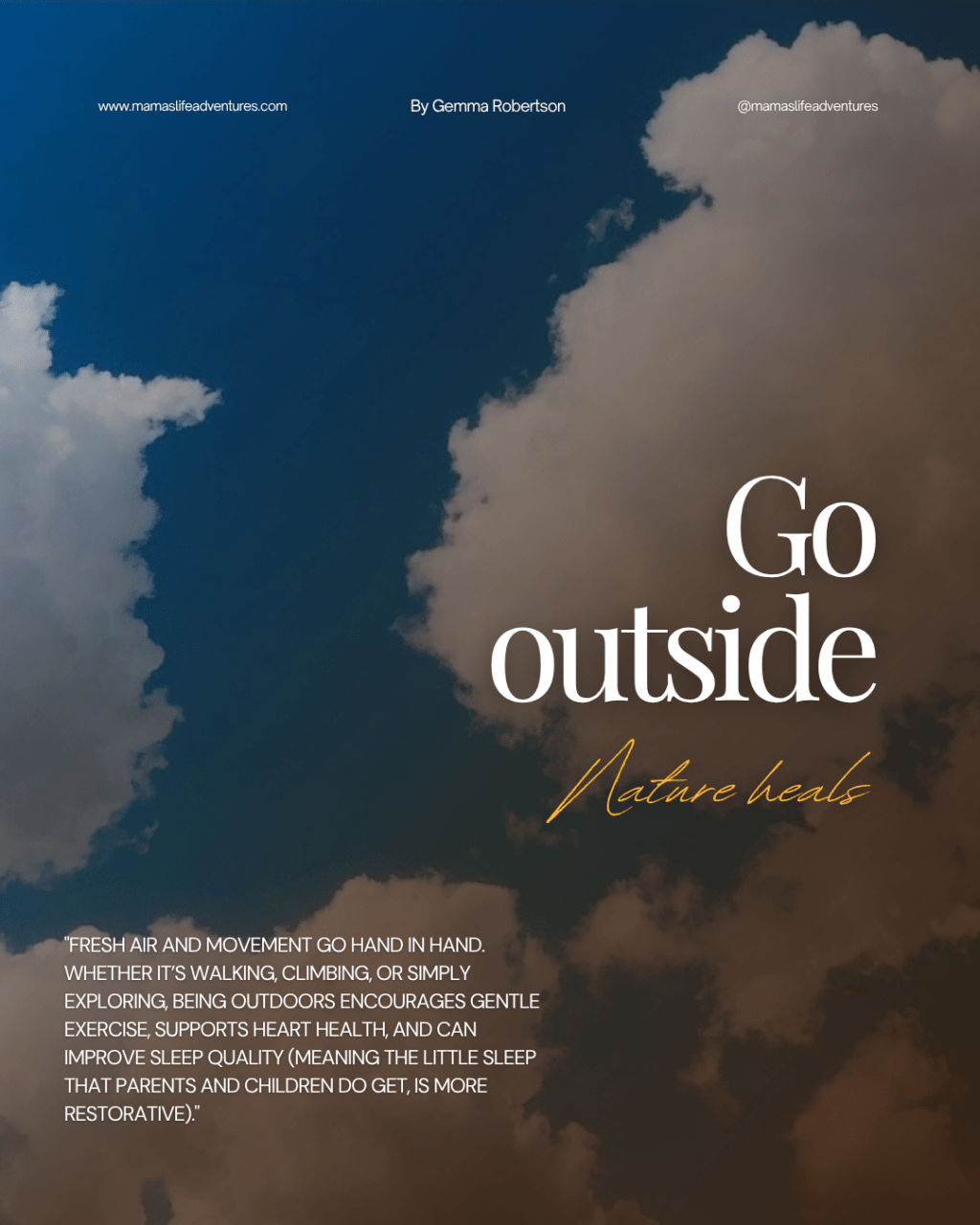
  • Go outside – Nature heals

    Go outside – Nature heals

    We aren’t wired to sit inside all day.

    As humans, we need sunlight on our skin, fresh air in our lungs, the rustle of trees and the sound of birdsong. These things aren’t luxuries—they’re essential.

    Time outdoors brings us back to ourselves. It grounds us, steadies our thoughts, and reminds us that we’re part of something bigger. Quite simply, nature helps us feel human again.

    Why the Outdoors Matters for Our Health

    Spending time outside doesn’t just feel good—it has real, measurable benefits for both our mental and physical wellbeing. Here’s why:

    Boosts mood and reduces stress – Exposure to natural light helps regulate our circadian rhythms and increases serotonin levels, which can improve mood and reduce anxiety. Even a short walk outdoors can lower cortisol (the stress hormone).

    Improves focus and mental clarity – Nature gives our overstimulated minds a break. Studies show that time in green spaces can improve concentration, creativity, and even memory—for both adults and children.

    Supports physical health
    Fresh air and movement go hand in hand. Whether it’s walking, climbing, or simply exploring, being outdoors encourages gentle exercise, supports heart health, and can improve sleep quality (meaning the little sleep that parents and children do get, is more restorative).

    Strengthens the immune system – Exposure to natural environments—especially woodland areas—has been linked to improved immune function, thanks to cleaner air and beneficial plant compounds. So there’s no harm in letting your little ones dig around in the mud collecting sticks and stones!

    There’s also something powerful about physically connecting with nature. Touching soil, trees, and plants isn’t just sensory—it can trigger real chemical responses in the body. Soil contains a natural microorganism called Mycobacterium vaccae, which research suggests can stimulate the release of serotonin, helping to lift mood and promote a sense of calm. Similarly, contact with plants and trees exposes us to natural oils and compounds—often called phytoncides—that have been linked to reduced stress levels and improved immune function. Even something as simple as walking barefoot on grass or running your hands through leaves can help regulate the nervous system, lowering stress and creating a feeling of balance.

    Living in the New Forest National Park, we’re incredibly lucky to have nature right on our doorstep. Long woodland walks, open skies, and winding trails are part of our everyday life. We spend hours wandering, noticing the seasons change, and letting the children explore freely. But I know that not everyone has access to forests or open countryside—and that’s okay. There are other ways to enjoy the outside no matter where you live.

    How to Bring the Outdoors to You

    Even if you live in a city or don’t have easy access to green spaces, there are simple ways to recreate those benefits wherever you are:

    Create a mini green space at home – Add plants to your home, balcony, or garden. Even a few pots of herbs or flowers can make a difference. Caring for plants can be calming and grounding in itself.

    Prioritise natural light – Open curtains, sit near windows, or take breaks outside during the day. Morning sunlight in particular helps regulate sleep and boost energy levels.

    Bring nature to your routine – Walk a different route to school, visit a local park, or spend time outside after dinner. Small, consistent moments outdoors add up.

    Engage your senses – Play nature sounds, light a natural candle, or use essential oils like pine or eucalyptus. It might sound simple, but sensory cues can help mimic the calming effects of being outdoors.

    Slow down and notice – Whether it’s watching clouds, listening to birds, or feeling the wind, take a few minutes to be present. Nature isn’t just a place—it’s a mindset we can access anywhere.

    Why the Outdoors is So Important for Children

    Children are naturally drawn to the outdoors—it’s where their curiosity thrives. Giving them time outside isn’t just beneficial, it’s vital for their development. Here’s why:

    Encourages imagination and creativity – Nature doesn’t come with instructions. A stick becomes a wand, a den, or a fishing rod. Outdoor play sparks creativity in ways screens simply can’t.

    Builds confidence and resilience – Climbing trees, navigating uneven ground, and exploring new spaces help children learn their limits, solve problems, and build independence.

    Supports emotional wellbeing
    Time outdoors can reduce anxiety, improve mood, and help children regulate their emotions. It offers space to breathe, move, and simply be.

    At its heart, spending time outdoors isn’t about grand adventures or picture-perfect days. It’s about small, meaningful moments—muddy boots, rosy cheeks, shared laughter, and quiet pauses under open skies.
    Wherever you are, there’s always a way to step a little closer to nature.

    And sometimes, that’s exactly what we need.

    Further Reading & Sources –

    Research has shown that a natural soil bacterium (Mycobacterium vaccae) may help boost serotonin levels and support mood regulation.
    (Lowry et al., 2007)

    Studies on “forest bathing” have found that trees release natural compounds (called phytoncides) which can reduce stress and support the immune system.
    (Li, 2010)

    Large reviews of multiple studies confirm that regular access to green space is associated with better physical and mental health.
    (Twohig-Bennett & Jones, 2018)

    Spending time in nature has been linked to reduced stress, lower anxiety, and improved mental wellbeing.
    (Bratman et al., 2015)

    Time outdoors can also improve focus, memory, and overall cognitive function.
    (Berman, Jonides & Kaplan, 2008)

    Even simply seeing natural environments has been shown to support healing and recovery.
    (Ulrich, 1984)

  • Fascia & Burnout: Simple Resets

    Fascia & Burnout: Simple Resets

    We’ve all been there—running on empty after weeks (or months) of constantly being on the go. The mental load, the physical exhaustion, the never-ending to-do list. I’m feeling it now too—that quiet but persistent sense that burnout is just around the corner.


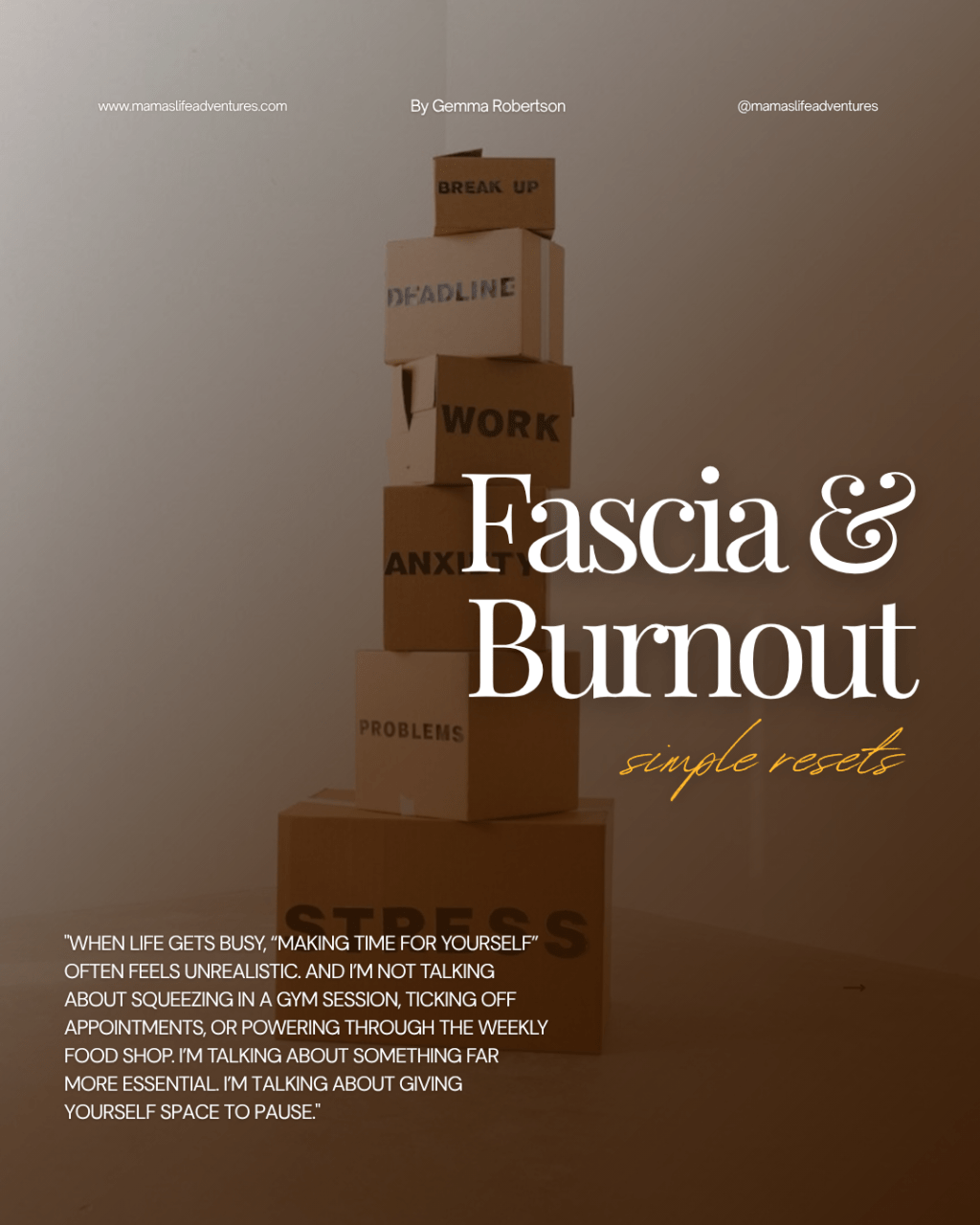
    When life gets busy, “making time for yourself” often feels unrealistic. And I’m not talking about squeezing in a gym session, ticking off appointments, or powering through the weekly food shop. I’m talking about something far more essential.
    I’m talking about giving yourself space to pause.


    Moments to reset your nervous system.


    Moments to let your mind soften.


    Moments to allow your body to fully relax and regenerate.


    This doesn’t require spa days or extra hours of sleep (though those are always a bonus when they happen). It’s about small, intentional practices—deep breathing, stillness, gentle awareness—that help your body come out of survival mode and return to balance.

    The Fascia


    Let’s talk about something we don’t often think about: fascia.
    What’s that, you ask?

    Fascia is a continuous web of connective tissue that runs throughout your entire body. It’s quite incredible—it wraps around your muscles, organs, bones, and nerves, holding everything in place while also allowing movement and flexibility.

    Think of it as both your body’s support system and its communication network. When you’re stressed, physically or emotionally—your fascia can tighten and become restricted. This can lead to stiffness, discomfort, fatigue, and that heavy, “worn down” feeling so many of us carry without even realising it. Many people can relate to this, and as a parent, exhaustion is certainly not a foreign concept.

    Fascia is also closely linked to your nervous system. When you’re stuck in a constant state of stress (fight or flight), your fascia reflects that tension. It becomes less elastic, less hydrated, and less able to support easeful movement and recovery.


    The good news? Fascia responds beautifully to slow, mindful practices. Gentle movement, deep breathing, and moments of stillness can help rehydrate and release this tissue, sending signals of safety back to your nervous system.

    In short—when you look after your fascia, you’re supporting your entire body to feel calmer, lighter, and more resilient.


    3 Steps to Reset


    When everything feels overwhelming, keep it simple. Resetting doesn’t have to be complicated or time-consuming. It’s something you can even practise with your children.


    1. Breathe with intention
    Take 2–3 minutes to slow your breath right down. Inhale through your nose for a count of four, then exhale slowly for a count of six. That longer exhale tells your nervous system that you’re safe, helping you shift out of stress mode.


    2. Create a moment of stillness
    This could be sitting quietly with a cup of tea, stepping outside for fresh air, or simply closing your eyes for a minute in the middle of the chaos. No phone, no distractions—just a pause.


    3. Gently move your body
    Slow stretches, rolling your shoulders, or even lying on the floor for a minute can help release tension held in the body. Think softness, not intensity.

    A Note on Somatic Movement


    One of the most supportive practices I’ve brought into my own routine is somatic movement—slow, intentional movement that helps you reconnect with your body and release stored tension.


    Each morning, while the coffee machine does its thing, I move. It doesn’t need to be complicated. I start with 100 jumps to wake up my body, followed by a few simple, intuitive movements and stretches. Nothing structured, nothing forced—just tuning in to what my body needs.


    It’s become a small but powerful reset. A way to shake off tension, support my fascia, and signal to my nervous system that I’m safe and grounded before the day begins.


    I’ll write a separate blog post diving deeper into somatic movement because, truly, it’s changed so much for me day to day and improved my overall wellbeing.

    How to Make Time Each Day to Prevent Burnout


    This is often the hardest part—finding the time when it already feels like there isn’t any. The key is to stop thinking of this as “extra” time. Instead, weave it into what you’re already doing:
    Take a few deep breaths before getting out of bed, pause for a moment of stillness while the kettle boils. Move your body while you make the kids breakfast. Dance your way out of the door on the school run. Step outside for fresh air, even if it’s just for a minute. It’s not about carving out big chunks of time. It’s about creating small pockets of awareness throughout your day. And just as importantly—give yourself permission.


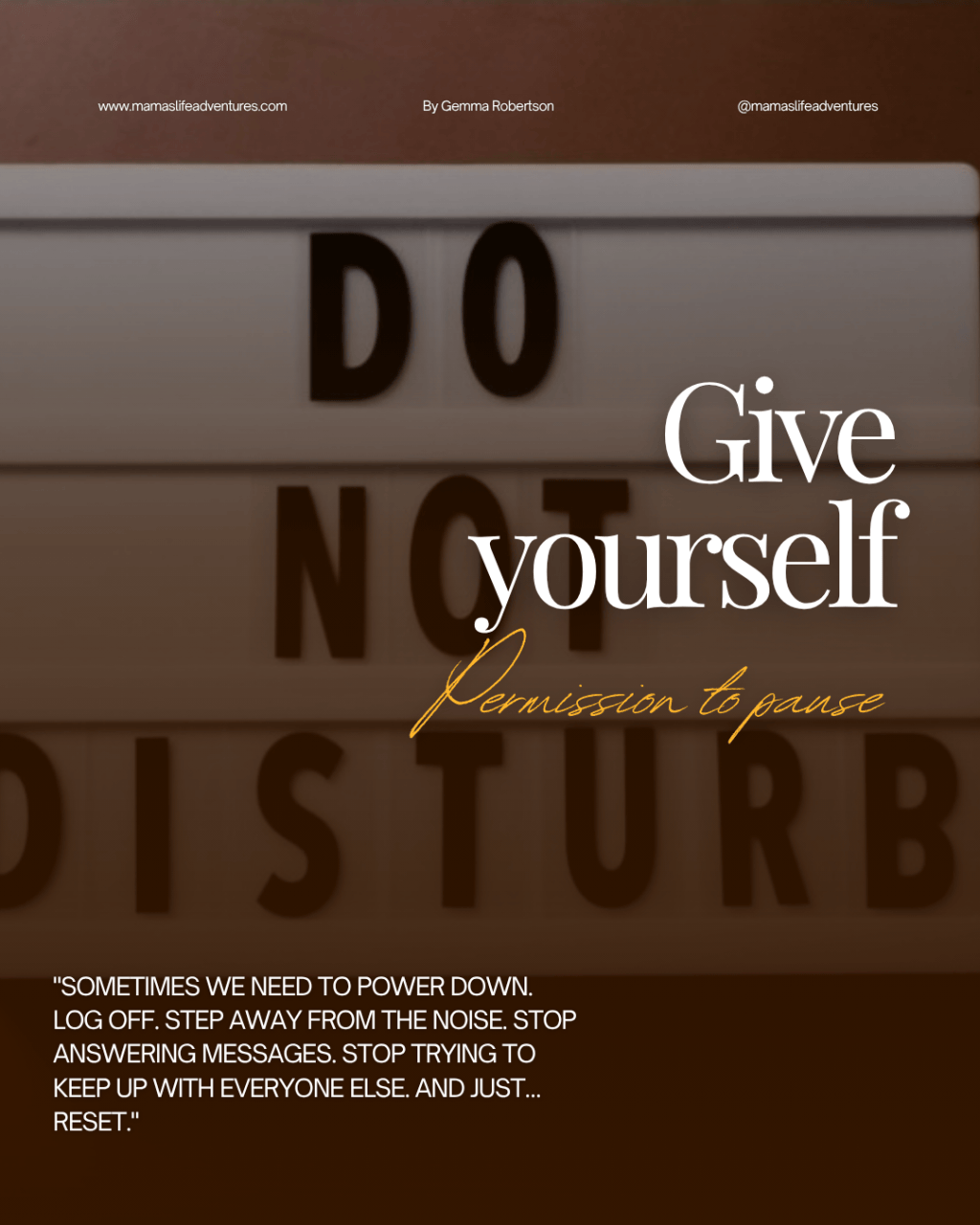
    Permission to pause.


    Permission to not be productive for a moment.


    Permission to look after yourself in a way that truly supports your nervous system.


    Because when you take even a few minutes to reset, you’re not taking away from your family—you’re showing up for them in a more grounded, present, and energised way.


    Burnout doesn’t happen overnight—and neither does recovery. But these small, consistent moments of care? They add up! And they matter more than you think.

  • The Quiet Power of Choosing Yourself

    The Quiet Power of Choosing Yourself

    In recent months, there’s been a noticeable shift on social media. Women — especially mothers — are beginning to put themselves first.

    Not in a selfish way, but intentionally. They’re prioritising their wellbeing so they can show up as healthier, more present versions of themselves for their families.

    While no one can operate at 100% all the time, this move towards consistent self-care feels transformative. From solo coffee dates and regular exercise to proper rest and uninterrupted time alone, creating space outside the role of “mum” is finally becoming normalised.

    Because how can we show up well if we’re burnt out and running on empty?


    The Invisible Load


    Many women carry the mental load of family life — the invisible work of planning, organising and anticipating everything:


    The house
    The schedule
    School projects
    Payments
    Clubs
    Meals
    Laundry


    The list never ends. This constant responsibility leaves little room for the person carrying it — unless she intentionally creates that space. And while that isn’t always easy, it’s essential.


    The World Health Organization defines burnout as chronic stress that hasn’t been successfully managed. Motherhood may not be classified as an occupation, but its demands are undeniable. Without recovery, prolonged stress affects not just mood, but physical health, relationships and overall wellbeing.


    Self-Care Is Sustainable, Not Selfish


    Research by psychologist Kristin Neff shows that self-compassion leads to greater resilience, emotional balance and overall wellbeing. In short, caring for yourself doesn’t reduce your ability to care for others — it strengthens it.


    One account I particularly love following is a mum who shares this in action: @timewithoutmax

    She regularly takes herself on solo dates and shows how trying new things alone can be a genuinely enjoyable and empowering way to spend your time.


    There’s also a deeper benefit 

    New experiences support neuroplasticity, helping the brain form new connections and stay adaptable.


    What we’re seeing online 

    Women taking solo time, exercising, travelling, or simply sitting alone in a café — isn’t indulgence. It’s maintenance. A quiet reminder: I matter too.
    From Luxury to Necessity
    Self-care shouldn’t be something we squeeze in once everything else is done. What if it was scheduled as deliberately as the weekly shop?


    When it becomes routine, it stops feeling like a luxury and starts feeling essential.
    That might look like:


    A non-negotiable weekly walk or class
    A monthly morning to yourself
    A quarterly reset day
    A solo trip each year
    Even just twenty protected minutes daily

    The key difference? It goes in the calendar first. Because if we wait for spare time, it rarely comes.

    The Ripple Effect


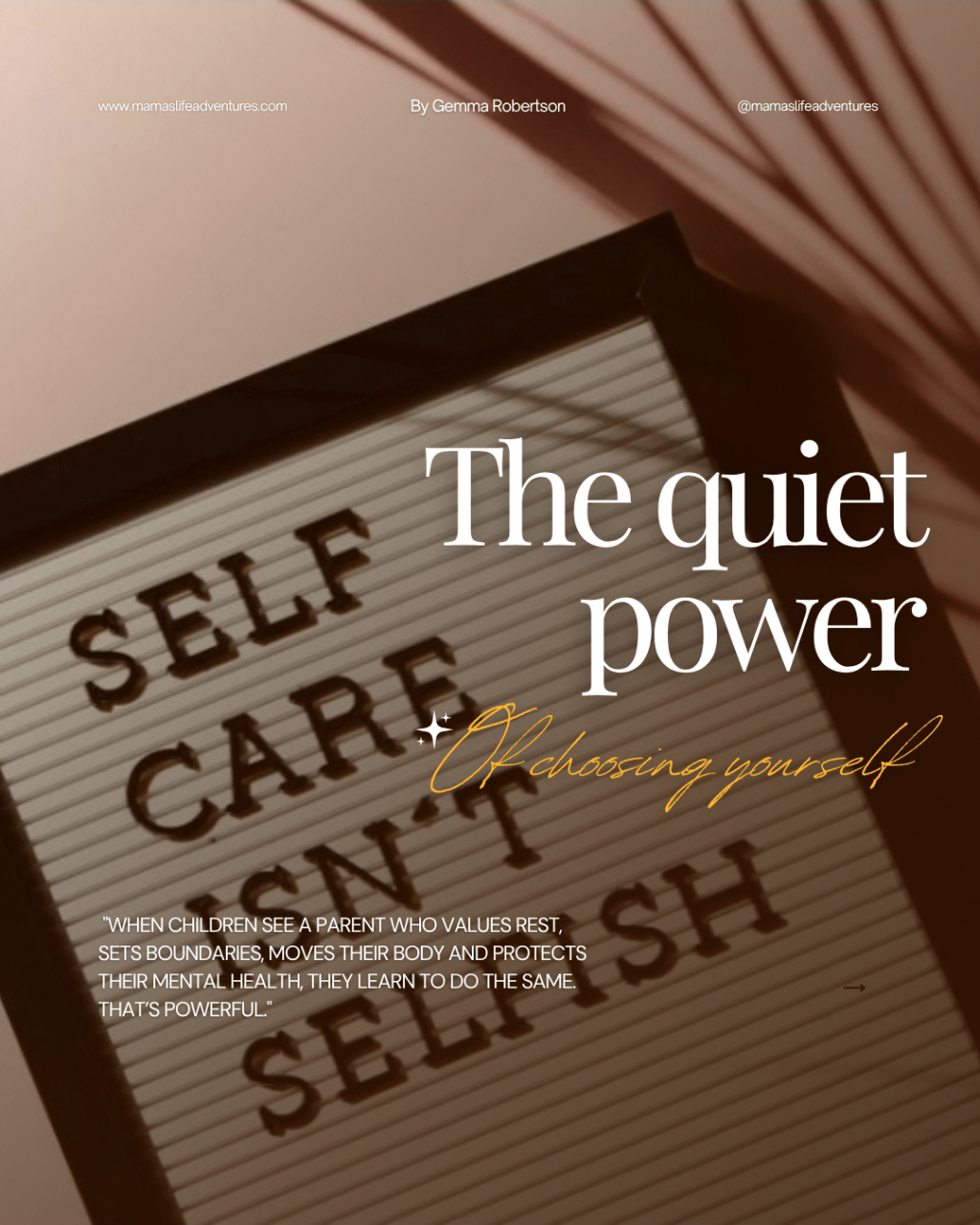
    When children see a parent who values rest, sets boundaries, moves their body and protects their mental health, they learn to do the same. That’s powerful.
    And this shift isn’t just for women. More men are embracing conversations around mental health and rest too. When both parents prioritise wellbeing, the whole family benefits.


    The Quiet Power of Being Alone


    There’s something deeply freeing about time alone. A quiet coffee. A walk without distractions. A moment without demands.
    Doing something simply because you want to — not because it serves anyone else. Not everything needs to be shared or seen to matter. In fact, the most restorative moments often aren’t.


    Whether it’s a small weekly ritual, a monthly reset, or a yearly escape — make it count.
    Do it for you. Not because you’ve earned it. Not because everything else is done. But because you deserve care too.


    References
    Neff, K. (2011). Self-Compassion: The Proven Power of Being Kind to Yourself.
    World Health Organization (2019). Burn-out an “occupational phenomenon” (ICD-11).
    Daminger, A. (2019). The cognitive dimension of household labor. American Sociological Review.
    Poo, A. (2015). The Age of Dignity.
    If you want, I can also format this for Instagram carousel, email newsletter, or your website