Tag: dailyprompt-1903

  • Screen free – Family time

    Screen free – Family time

    If you’ve ever sat in a restaurant, looked around, and noticed how many little faces are lit up by screens instead of conversation—you’re not alone. It’s become the norm, hasn’t it? And with the UK government recently introducing new guidance around children’s screen use, it’s clearly something many of us are thinking about. The advice suggests no screen time at all for children under two (aside from things like video calls), and limiting it to around an hour a day for those aged two to five. It also encourages families to avoid screens during meals and instead focus on interaction—talking, playing, and spending time together. And honestly, that part really resonates with me. Time spent at the table with my family is precious to me.

    We’re deep in the digital age. Our children are surrounded by screens whether we like it or not. At home, at school, and almost everywhere in between, as well as seeing adults glued to their phones. While technology has its place, it also has the potential to impact their mental health if we’re not mindful. We know how too much screen time affects us as adults so imagine what it’s doing to a young person’s brain!

    As someone born in 1990, I’ve watched technology evolve rapidly. But I was also lucky enough to grow up in a time when screens weren’t part of family gatherings, dinner tables, long journeys, or meals out. Some of my fondest memories are of meals out and holidays with my family—trying new foods, meeting new people, and just being part of the world around me.
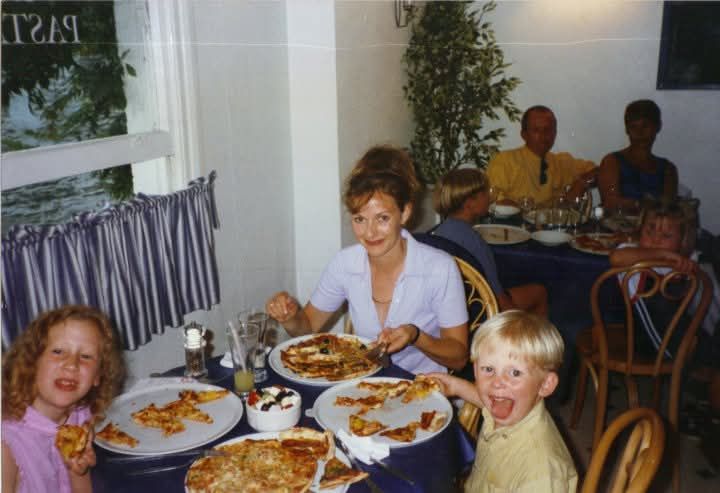
    Me, my brother and mum 1996

    My mum used to say, “Use your manners, let’s pretend we’re eating at the Queen’s house.” My brother and I would sit up straight, pinkies raised as we sipped our drinks, fully committed to the idea that we were in royal company. It was simple, a bit silly—but it made those moments feel special, and they’ve stayed with me.

    My dad was always the one encouraging us to be brave with food—especially seafood. On holidays, he’d show us how to peel prawns or debone fish. Things that might make some children squirm somehow fascinated us. It turned meals into little adventures and made trying new things feel exciting rather than intimidating.

    Of course, it would be naïve to think we can eliminate screens from our children’s lives completely. The world is digital, and they need to be confident using technology. Screens can educate, inspire, and support learning—so rather than seeing them as a hindrance, it’s more helpful to think of them as tools. Tools we can pick up and put down with intention. Teaching children that balance is invaluable.

    But what we shouldn’t do is let devices replace human interaction. Let them experience the world—and see you experiencing it with them. Bring them along with you, share what you love, and show them the world through real experiences. Accept that things will look different with children in tow. Swap long, uninterrupted dinners for noise, laughter, mess, and the occasional meltdown.

    Dining Out Without Screens

    If you’re heading out for a meal with children, it helps to reset your expectations. A calm, uninterrupted dinner might not be realistic—and that’s okay.
    Restaurants are full of stimulation: new faces, sounds, lighting, music, and décor. It’s natural for children to want to explore. Let them. Follow their lead (safely), show them things, and embrace their curiosity.

    Here are a few things that help us when dining out as a family:

    Come prepared
    Pack small activities—toys, colouring, or fidget items. They’re great for keeping little hands busy while waiting for food.

    Choose your timing wisely
    Avoid booking too late, especially for evening meals. Tired children and long waits rarely mix well. Earlier sittings are often quieter and quicker.

    Make the table interactive
    Play simple games like “What can you see?” or “What can you smell?” Tailor it to your children’s ages—we have a one-year-old and a ten-year-old, so creativity is key!

    Let them explore
    With younger children, take a walk around. Let them get familiar with the space, say hello, and practise simple manners like smiling, waving, and saying “please” and “thank you.”

    Give older children responsibility
    Encourage them to read the menu, choose their meal, and even order it themselves. It builds confidence and independence.

    Share food
    Ordering picky bits or tapas-style dishes makes it easier for everyone to try new things. It also works well when meals are interrupted by the occasional wander.

    Take turns
    If there are two of you, swap roles—one engages with the children while the other gets a moment to sit and relax.
    Follow their energy
    Let them move, laugh, and explore. Children mirror your mood—if you’re stressed, they’ll feel it too.

    Pause and take it in
    Every now and then, sit back, sip your drink, and soak it all up. These are the moments they’ll remember. Be sure to cheers with your family too! Every outing should be celebrated.

    A Gentle Reminder

    It’s also important to remember that every family is different. It’s easy to look around and make quiet judgements when you see children with screens at the table or on outings—but the truth is, you don’t know their reasons or their circumstances. Focus on your own family, your own values, and what works for you. And be kind—to others and to yourself. The world needs more of that.

    When It Doesn’t Go to Plan

    Sometimes it won’t. There might be tears, tantrums, or food everywhere. You might find yourself crawling under the table, quietly cleaning up the aftermath. But that’s part of it.

    Consistency is key.

    Choosing to leave devices behind during family outings creates space for connection. The more you go screen free, the more it becomes the norm. Your children will look back on the moments you spent together and thank you.

    The Bit That Matters Most

    One day, these dinners won’t be noisy. There’ll be no crayons rolling off the table, no little voices asking a hundred questions, no tiny hands reaching for yours. And you won’t remember the meals where everything went perfectly—you’ll remember the ones filled with laughter, chaos, and connection. So leave the screens behind when you can. Be present. Let them explore, make a mess, ask questions, and be part of your world.
    Because that’s where the magic is.
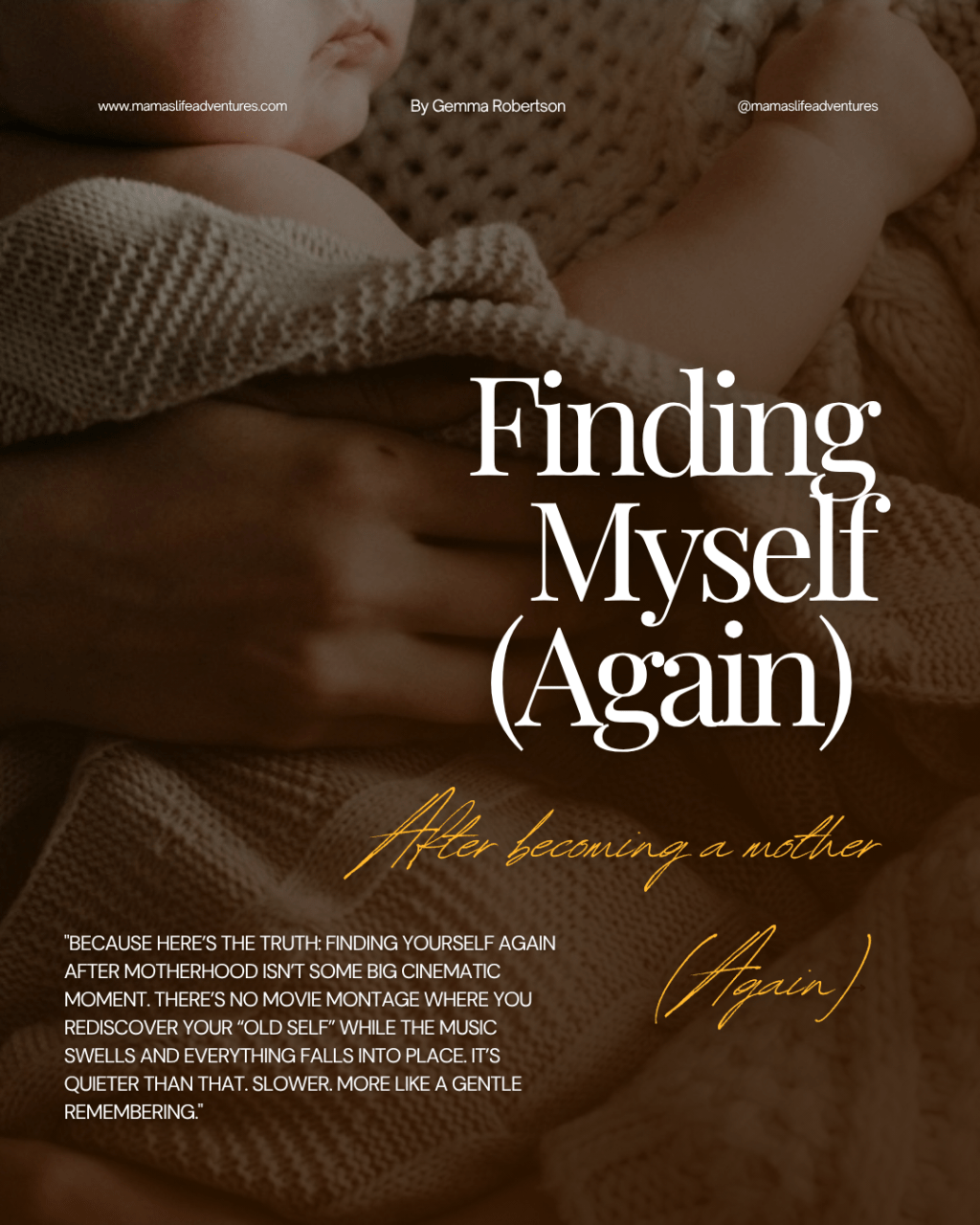
  • Finding Myself (Again) After Becoming a Mum (Again)

    Finding Myself (Again) After Becoming a Mum (Again)

    After birthing a child, you get so wrapped up in the depths of new motherhood that it’s easy to lose yourself. Your boobs are leaking, you’re crying at Instagram reels, your clothes don’t feel right, and your hair’s whisping all over the place. You start to drift into the vast plains of parenting, unsure where you belong now. You’re overflowing with love and joy — yet there’s this quiet ache, this subtle mourning for the woman you used to be.

    It’s confusing, isn’t it? How something so pure and magical can coexist with this tiny thread of sadness. You love your baby with every fibre of your being, but you also miss you — the spontaneous you, the confident you, the you who wandered freely.

    I was lucky enough for my baby blues to pass quite quickly. I truly believe that years of self-reflection and healing helped pull me out of a potentially dark place early on. Knowing what would bring me back to myself wasn’t just helpful — it was an essential survival tool. And I’ll be forever grateful to my past self for doing the work before my second baby arrived.

    Because here’s the truth: finding yourself again after motherhood isn’t some big cinematic moment. There’s no movie montage where you rediscover your “old self” while the music swells and everything falls into place. It’s quieter than that. Slower. More like a gentle remembering.

    For me, it started with movement. Nothing fancy — just slow walks outside, one foot in front of the other, usually with the baby strapped to my chest. Feeling the sunshine on my face, listening to the trees whisper in the wind… those tiny moments were breadcrumbs leading me home. Nature truly heals, tell me I’m wrong.

    Then came the baby steps (pun intended). Dusting off the yoga mat and stretching deeply in ways I couldn’t while pregnant. Being kind to myself. Drinking more water than I thought humanly possible and fuelling my body with real, nourishing food. Using snippets of time to do small things that spoke to my soul — a hot bath, a little home pamper, or a good old wardrobe clear-out. A reset.

    And then… I started to wake up.

    Probably because dancing to drum and bass in the kitchen at 7 a.m. shook something loose in my soul and reminded me I was not small — I was BIG. I remembered who I was: the chatterbox, the bouncy ball of weirdness, the loving, feels-too-much, loves-too-hard, wonderful human with a lust for life and everything in it. I was a mum, yes — not a regular mum, a cool mum (IYKYK), but I was also a human being, navigating life on this floating rock in space that we call Earth.

    And let’s talk about support — because having a partner who actually shows up makes a world of difference. I’m lucky enough to have someone who lets me be my messy, emotional, beautifully exhausted self without judgment. Letting me ugly cry for no reason and then passing me a plate of food is top tier relationship goals (just saying). Not everyone has that, and it breaks my heart that some mothers walk this road feeling alone — I did once.

    But I do believe finding someone — whether it’s a friend, a sibling, a parent, or another mum who just gets it — is essential. Someone you can rely on, who makes you feel seen, who reminds you that you’re still you beneath the motherhood.

    Because that’s the real magic of it all — realising you’re not trying to get “back” to who you were. You’re meeting a new version of yourself: softer yet stronger, stretched in every sense, but somehow more whole. Never apologise for who you are or who you are becoming. We change and grow with every season in life. If you resurface as a different you after becoming a mum, that’s ok! You might find a different you, a better you. Just as long as you feel comfortable and happy in your own skin, that’s all that matters. Stay true to yourself. It doesn’t have to make sense. None of it does. You just have to remember that every day is a new day and you’ll find yourself along the way. 

    So if you’re somewhere in that hazy fog, trying to remember who you are beneath the nappies, the sore body, the cold coffee, and the emotional rollercoaster that is motherhood — just know this: she’s still there. You’re still there. You’ll find her again — one home-cooked meal, one walk in the sunshine, one filthy drum and bass track, and one honest cry at a time.

    I got you girl 🫂💓

  • Present, Not Perfect: A Mindful Approach to Parenthood

    Present, Not Perfect: A Mindful Approach to Parenthood

    Mindfulness — it’s a word that’s become pretty trendy lately, right?

    It seems like there’s a bit of a stigma around calling yourself a mindful person these days. As if saying you’re a mindful mother (or parent) means people expect you to bake only organic goods, wear dungarees, have an allotment (I actually did have one once, and I definitely own a pair of dungarees, but still! 🤣), and never drop the F-bomb or enjoy a few too many glasses of wine.

    I’m here to tell you — that’s a load of rubbish and quite frankly, unrealistic.

    So, What Is Mindfulness, Really?

    Photo credit – Google

    At its core, mindfulness is simply about being aware — noticing what’s happening inside and around you without judgment. And that’s something anyone can do with practice.

    The kids have dropped food all over the floor, everyone’s screaming and overstimulated? Take a deep breath and remind yourself: we’re all just tiny humans living on a floating rock in space. That’s mindfulness.

    Chasing your kids through the forest, covered in mud, trying to stop your youngest from eating rocks — then taking a moment to stop, look around, breathe in the fresh air, and feel grateful for the beauty around you. That’s mindfulness.

    Taking time out for yourself — whether it’s yoga, the gym, a walk in nature, dinner with friends, or even a Netflix binge in your pajamas with snacks — and allowing yourself to reconnect and unwind. That’s mindfulness too.

    How to Practice Mindfulness

    There are so many ways to bring mindfulness into your day, but it often starts with something as simple as pausing in a moment of overwhelm.

    Take a breath.

    Meet whatever’s happening with steadiness and kindness.

    Doing this regularly helps rewire your brain, creating new neural pathways that make it easier to stay grounded and aware of your emotions.

    Whatever you’re feeling — anger, sadness, joy, gratitude — let yourself feel it. All of it. Feeling is what makes us human.

    Nobody’s Perfect

    And let’s be real — nobody gets it right all the time. I certainly don’t! My mindfulness practice escapes me sometimes. I get angry. I shout. I cry. Sometimes I go inward and struggle to express myself.

    But those moments are exactly when I realise I need a time out — a mindful pause — a break from my thoughts. I take a step back, breathe, reevaluate, and try to meet whatever I’m feeling with patience and understanding.

    A Final Thought

    If the idea of mindfulness feels a bit unrealistic or even frustrating, that’s okay. It can sound like one more thing to add to an already overflowing plate — especially as a parent.

    But mindfulness isn’t about perfection or pretending everything’s fine. It’s about giving yourself a little space to breathe, reflect, and approach your day with a clearer mind and softer heart.

    So next time things feel chaotic, take a mindful moment for yourself.

    Pause.

    Breathe.

    And remember — you don’t need to be perfect to be present. 🙏✨️