Tag: family

  • Our Top 5 Camp Bestival Tips for Families 🎪✨

    Our Top 5 Camp Bestival Tips for Families 🎪✨

    Our first Camp Bestival as a family of four was everything we hoped it would be… and a little bit more chaotic than we perhaps anticipated!
    There was so much to see, do, eat, and to and explore that we quickly realised you simply cannot do everything. And, actually, that’s probably the whole point.

    Camp Bestival is one of those places where you have to leave your expectations at the entrance. Embrace the madness, let the kids be kids, stay up later than you normally would, eat something ridiculous, dance badly and just enjoy being there. No pressure, no rules!

    We went as part of a group of friends, which I honestly think made a huge difference to our weekend. It meant more adults to share the load, more people to keep an eye on the children and more opportunities for everyone to get a little breather.


    So, after our first family adventure, here are the five things we’d definitely recommend if you’re heading to Camp Bestival with children.
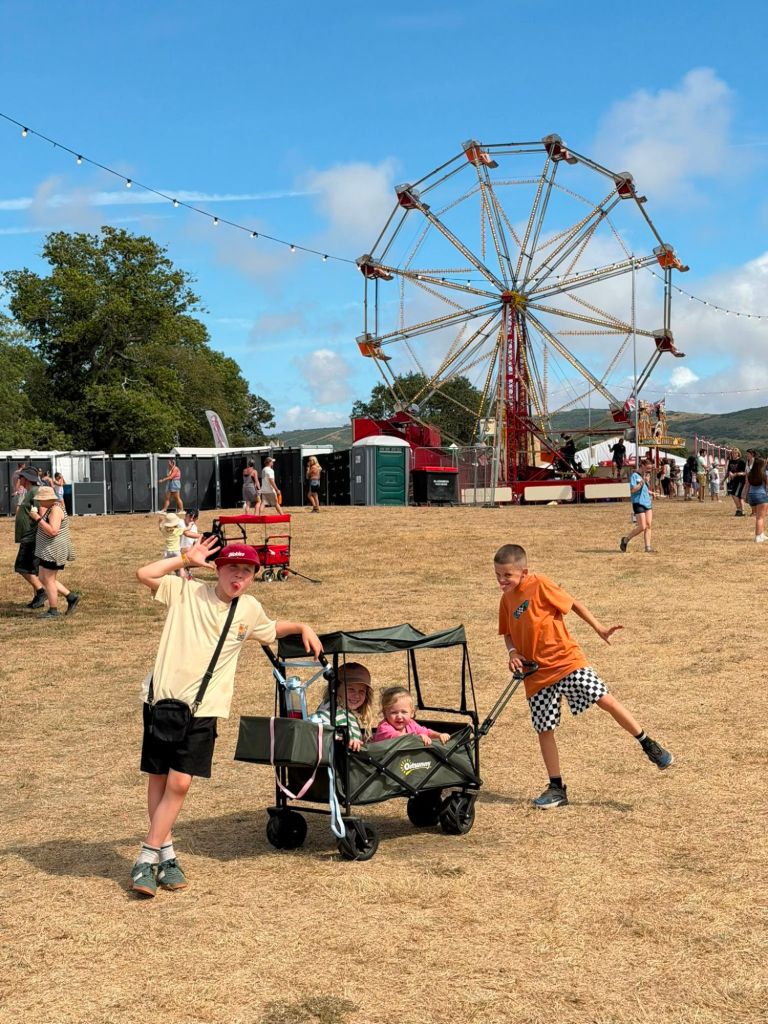
    Cheeky!

    1. Pack food. Lots of food. 🥐 🍌

    Or, as I like to call it: prepare for the snack apocalypse.

    If your children are anything like ours, they will spend the entire weekend saying “I’m hungry” usually approximately 30 seconds after you’ve just bought them something to eat.

    We took plenty of breakfast bits, snacks, cereal bars and fruit with us, and I would absolutely recommend doing the same. Although next year milk and cereal for my eldest is getting thrown in. He was obviously near death without it.


    We also bought our eldest the extra food pass, which was £50 for the weekend. This included lunch and dinner from Friday to Sunday, unlimited fruit and water, plus a daily “sweet treat”.

    It was actually really useful for us because it meant he was getting proper meals and, importantly, it helped reduce the constant requests for food every five minutes!
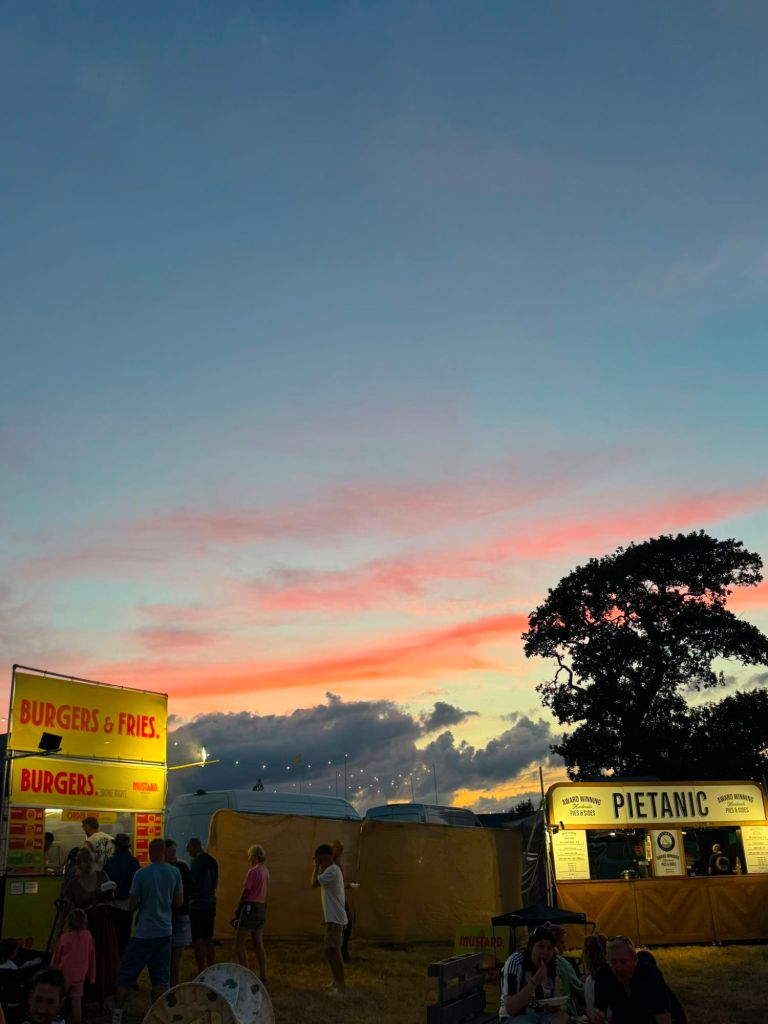
    The downside was that the queues could be difficult, particularly when you’re juggling tired children, and the food choices were fairly basic. The lunches were a sandwhich/wrap/pasta along with a snack, fruit and a drink. Nothing exciting but it filled a hole! (albeit bottomless)

    The evening meal voucher could be used at different food trucks, which was a nice touch, and the sweet treat could be chosen from various vendors. Henry enjoyed, mac and cheese, pizza, chicken and chips, ice cream and all the sweets! Such a treat!

    Our verdict? The pass was handy, but we’d still absolutely recommend bringing your own breakfast and a serious supply of snacks. You’ll thank yourself later.

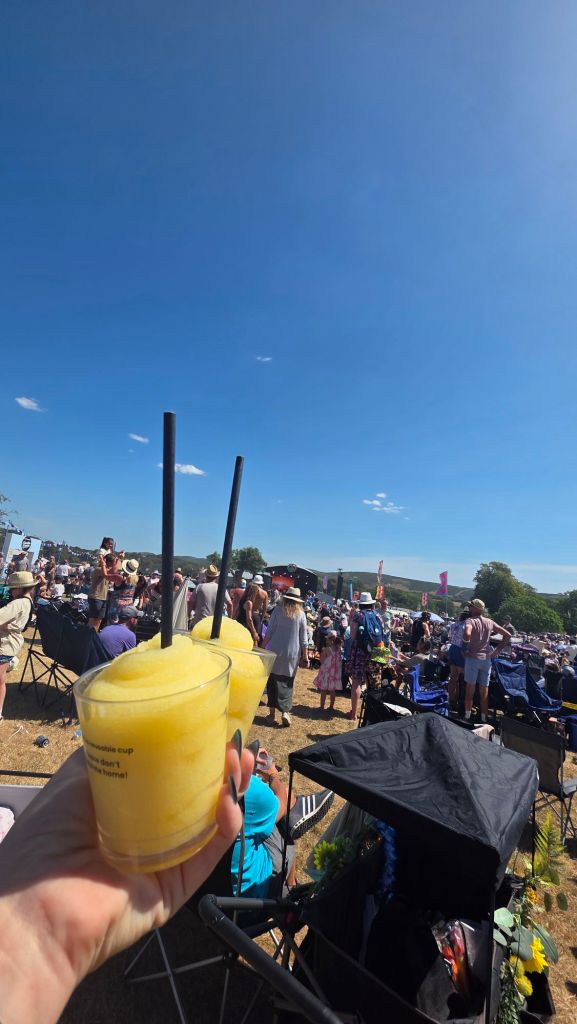
    For adults, the options were endless, we tried so many different things! We also spent what felt like £500 on frozen margaritas. Because… Essential!
    2. Prepare for the walk. 👟⛰️

    Welcome to Leg Day: Festival Edition.

    There is a LOT of walking at Camp Bestival. And there are hills.

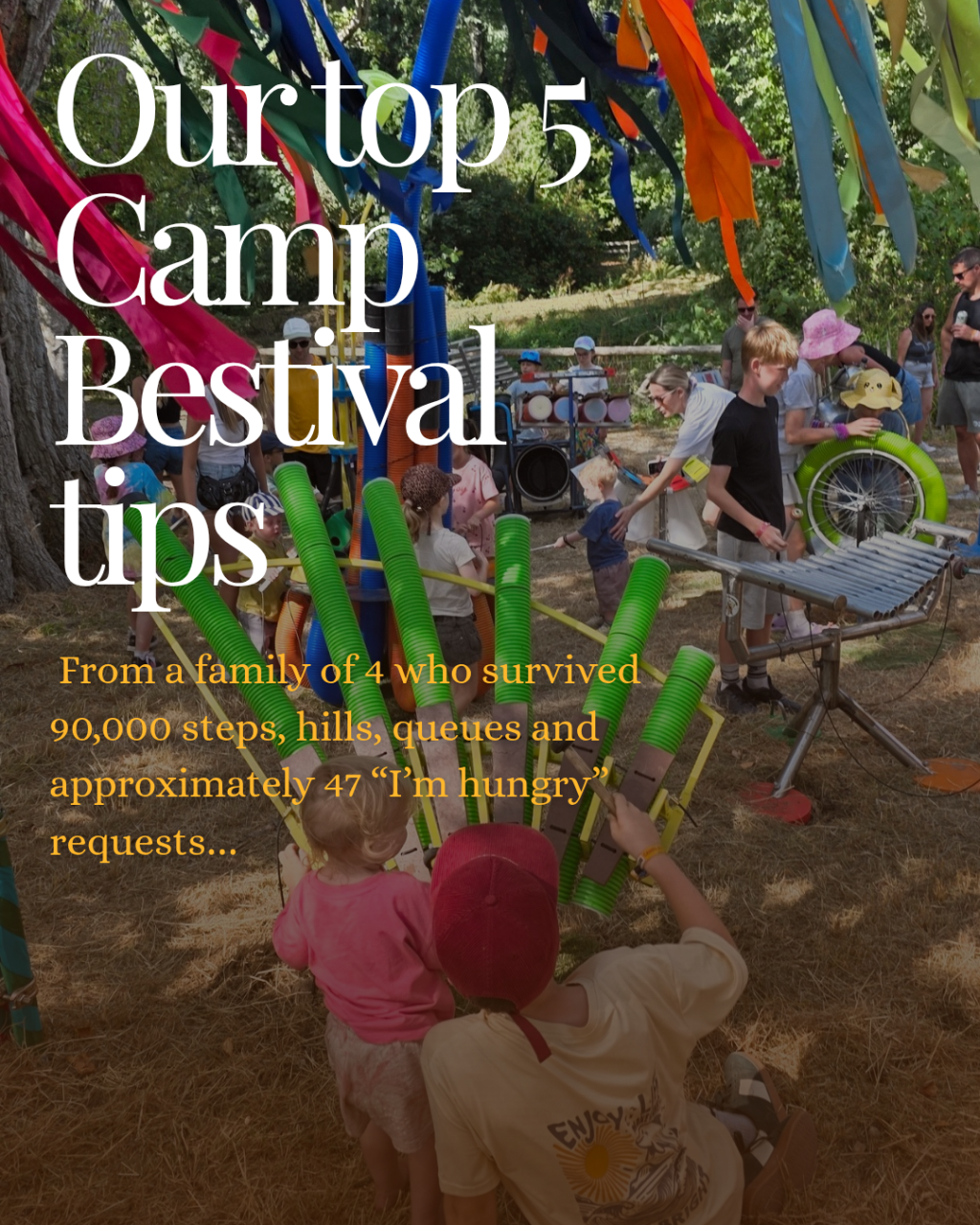
    We clocked up nearly 90,000 steps over the weekend, which is impressive I think!

    Some of those steps involved chasing children who had spotted something exciting in the opposite direction. Some were dancing and some were trips to the bar and back. But most of them were the journey to and from the campsite to the main festival.

    Proper footwear is a must.
    We’re talking trainers or boots — shoes you can genuinely walk in all day. Leave the questionable festival footwear at home. Your feet will thank you. Although my trusty birkenstocks did do me well!

    If you’re taking a trolley or pram, be careful not to overload it. It is very easy to look at your camping gear and think, “We’ll just put that in there too.” You will then find yourself pushing it up a hill while questioning every decision you’ve ever made.

    Pack light where you can. You’ll be doing enough heavy lifting already.

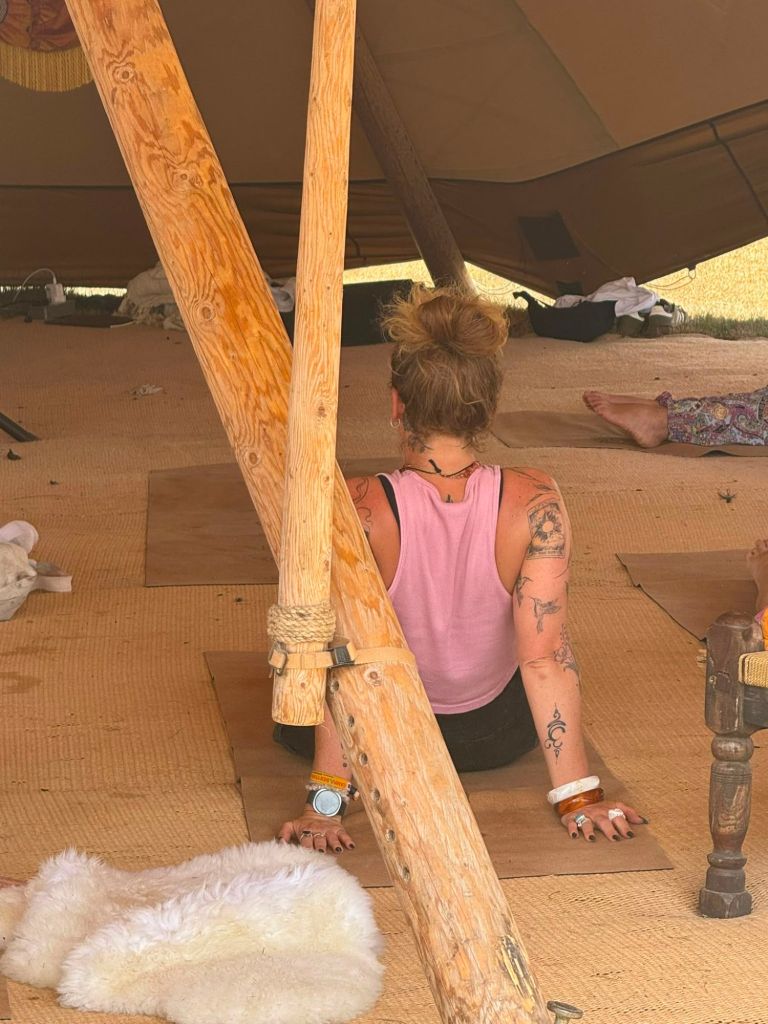
    I enjoyed stretching out my body at the ‘Slomo Village’ it was a little slice of heaven for my tired legs. There were yoga classes and sound baths running all day and a mini retreat with sauna and cold plunge (for an extra cost). Definitely a godsend if you need a moment of peace and to ground yourself in the chaos.
    3. Go with friends. 👯‍♀️👯‍♂️

    The more adults, the better.
    Honestly, if you can go to Camp Bestival with friends, do it.

    It’s brilliant having other adults around because you can tag-team the children, give each other breaks and share the general parenting workload. Everyone needs a solo shower at some point!
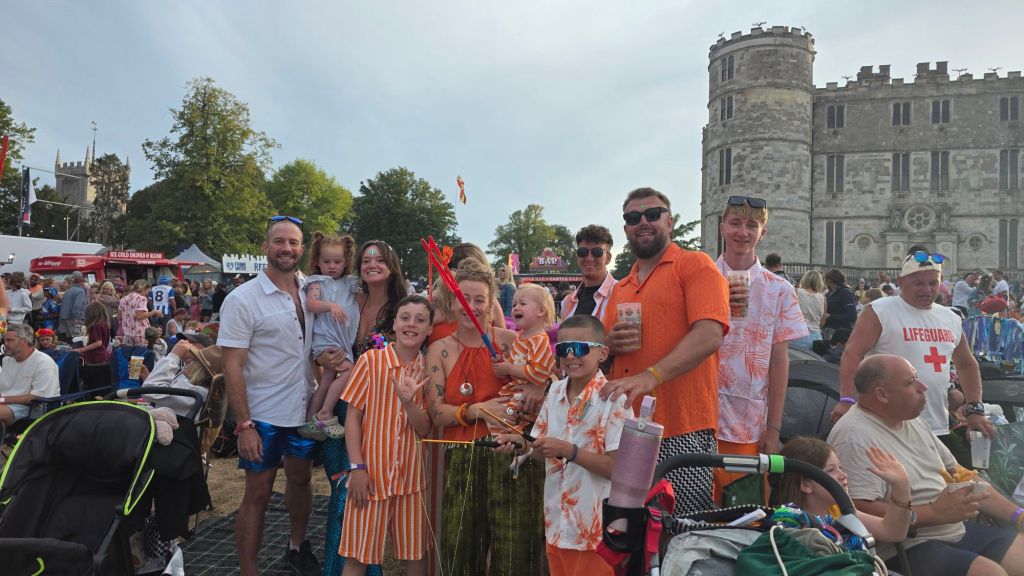
    Our crew

    Someone can take the kids while someone else goes for a coffee. Someone can head back to the campsite for forgotten essentials. Someone can take the children to an activity while the others watch an act. And, perhaps most importantly, you get to enjoy it together.
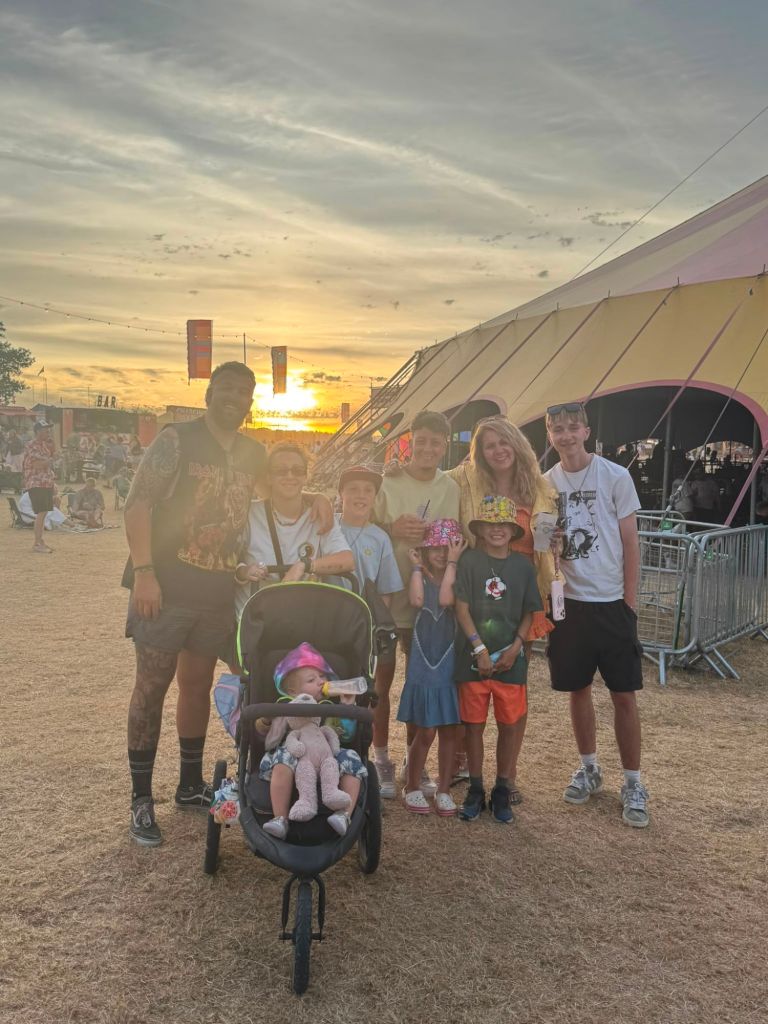
    Our last day!

    We were able to camp on our friends’ campervan pitch, which meant we could all be together. If you fit within their designated pitch area, this is allowed, so it’s definitely worth looking into if you’re travelling with friends who have a campervan.

    The campervan field did have one slight issue, though… There were only 10 showers for the whole thing.
    Ten.
    For everyone.
    We quickly discovered that around 4pm was the magic shower time because there was no queue. It actually worked brilliantly for us. We’d head back for a little “refresh”, get everyone showered and changed, and then let the children have some downtime before heading back out for the evening.
    It gave everyone a chance to reset before the late nights.
    And believe me, you need those little resets.

    Festival bestie

    Camp Bestival is magical, but it can also be very busy and overwhelming, especially for younger children. Having friends around made everything feel much more manageable.

    4. Find your spot — and make an itinerary. 📍🎶

    One thing we learned very quickly was that you cannot do everything.
    There is simply too much going on.

    There are shows, music, crafts, activities, food, dancing, characters, performances and things you didn’t even know existed until you walked past them.
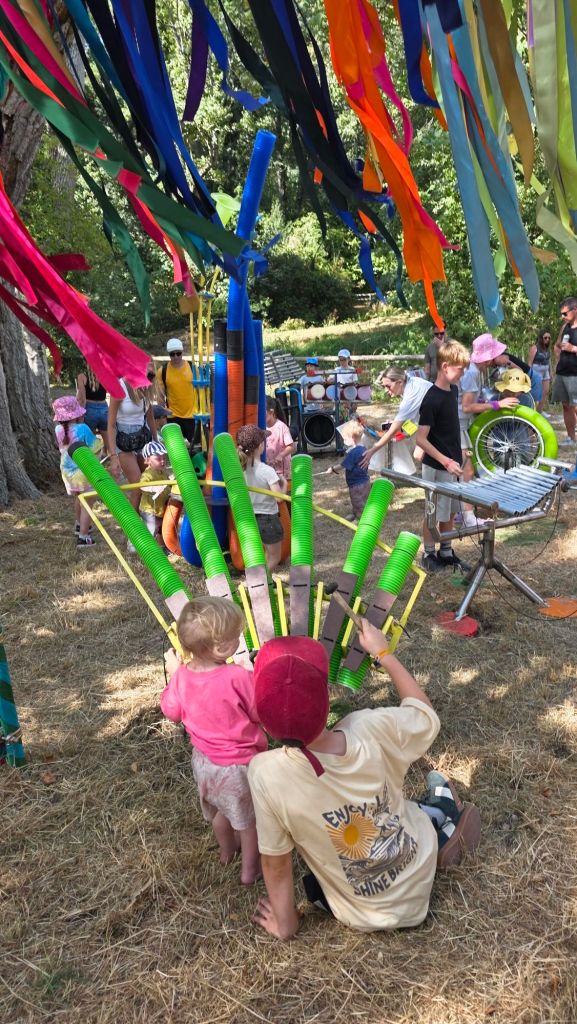
    The Dingly Dell!

    We spent quite a lot of the weekend saying, “Oh, we’ll come back and do that later.”
    Spoiler: we didn’t.
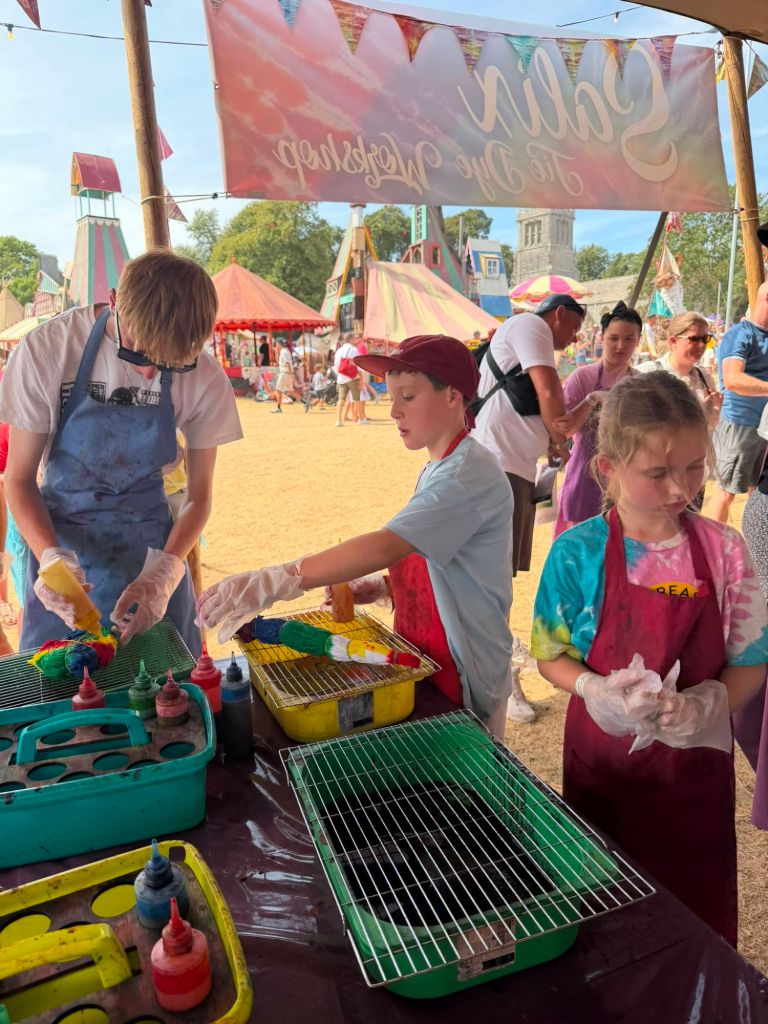
    Making their own tie-dye t-shirts!

    Next year, we’re definitely going to make better use of the Camp Bestival app. You can like the different shows, acts and events you want to see, and it creates an ordered itinerary for you.

    We’re also going to deliberately schedule some downtime for the amazing arts and crafts on offer. There were so many things we wanted to stop and do, but when you’re rushing from one thing to another, it’s easy to miss them.
    And then there’s the main stage.
    Find your spot early. If you’re a group with children of different ages, finding a place to stand together later in the day can be really difficult when it’s busy.

    We figured out on Saturday that the best approach was to set up our spot early with chairs and blankets. Then, throughout the afternoon, the adults could take turns going back for a “refresh” or heading off to grab drinks while someone stayed with the children.

    By the evening, we had a comfortable little space where we could all watch the main stage together. We stayed quite far back because it was simply too loud for our youngest closer to the front, but honestly, it didn’t matter. We could still see the stage, the children had room to move around and we could all enjoy a dance together.
    Sometimes you don’t need to be right at the front to have the best time.

    5. Stay the extra night. 🌙✨

    If you can stay until Monday, do it.

    This is probably our biggest regret from the weekend.
    We unfortunately had to leave on Sunday night because our youngest had reached the point where it was all becoming a little too much.

    We packed up early on Sunday morning and then tried to stay until the headline act, Fatboy Slim, who was on very late that evening. In hindsight… that was probably ambitious.

    By Sunday evening, everyone was tired, we’d already had an enormous weekend and the thought of packing everything up after a late-night headline act was not exactly appealing.
    Next year, we’re staying the extra night.

    Lulworth Castle by night

    The plan is to have a slower Monday morning. Have breakfast. Let the children roam around. Have one last wander. Take our time packing up.
    No rushing.
    No trying to squeeze every last drop out of the weekend.
    Just one more slow morning to enjoy the magic.
    And finally… leave your expectations at the entrance.

    If there’s one thing I’d tell another family going to Camp Bestival, it’s this:
    Don’t try to make it perfect.
    You won’t see every act.
    You won’t make every activity.
    Someone will probably have a meltdown.
    Someone will definitely be hungry.
    You’ll forget something.
    You’ll get tired.
    You’ll queue.
    You’ll walk up a hill and wonder why you brought so much stuff.
    And then you’ll turn around and see your children dancing, laughing or completely fascinated by something you’ve never seen before — and you’ll remember why you came.

    Whizzing around

    Camp Bestival feels like a little world of its own.
    It’s busy and chaotic and sometimes overwhelming, but it’s also incredibly joyful. We found everyone we met to be so kind and happy, and what really stood out was how much the children were thought of.
    So let the kids be kids.
    Stay up late.
    Eat the ice cream.
    Dance.
    Get involved.
    Take the silly photos.
    Let your hair down.
    And embrace the madness.
    Because somewhere between the hills, the tired feet, the queues and the snack negotiations, there’s a whole lot of magic happening.
    And we can’t wait to do it all again next year. 🎪❤️

    P.S pack hand sanitiser like it’s going out of fashion 😂 IYKYK
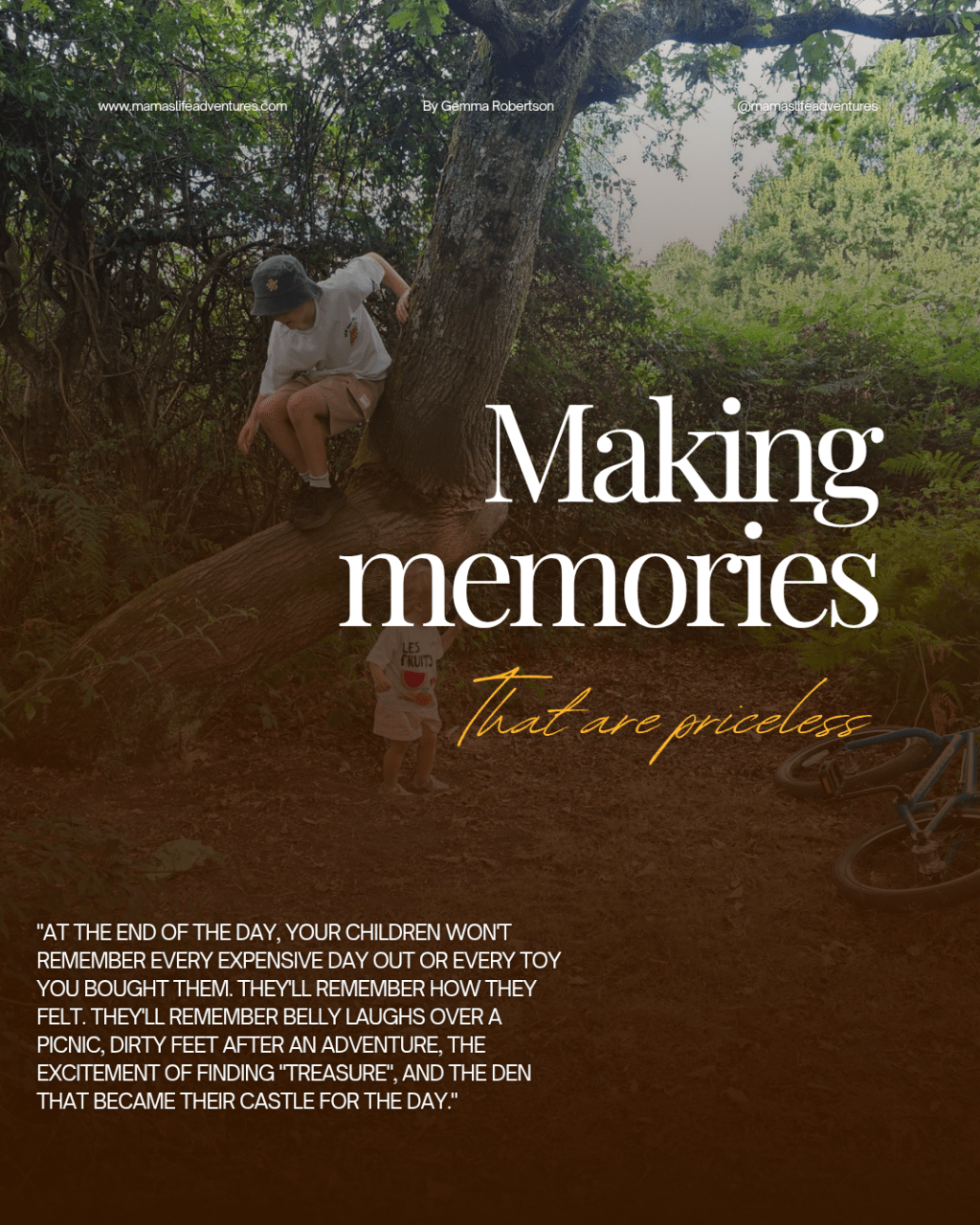
  • Making memories – That are priceless

    Making memories – That are priceless

    Making memories should not come at a cost. Memories are priceless, and they should be just that! Free to make!

    The summer holidays are upon us. The routine flies out the window. No school runs, clubs or after-school activities. All of a sudden, the days feel longer.

    There was a time when I’d dread just that. Long days to fill and the pressure to keep everyone busy. The pressure to do things, visit places and spend money on pointless stuff just to make “memories”. It can be exhausting trying to come up with ways to fill time.

    Don’t get me wrong, when the budget allows bigger things, days out or long weekends away, then we love to seize the moment and make the most of it. But, when your bank account needs a break then it’s time to reevaluate what’s important. What is is that matters most?

    Time – What your children really want is time. Time with you. Time spent laughing and playing. Time spent making memories with the people they love.

    The summer holidays can put a strain on you and your wallet. So here are some wholesome, free and fun things you can do with your children this summer that will create core memories they’ll carry with them forever.

    A treasure hunt and picnic –

    Make your own treasure maps at home. Draw a map of your local area and write a list of “treasures” to find. A giant leaf, a heart-shaped rock, a feather… think of little things you can pop into a bag and take home to admire after your adventure.

    Chuck some snacks into a backpack and find a spot along the way to sit, chat and enjoy your picnic. Take a moment to slow down and really enjoy your time together.

    Top tip: For an extra bit of magic, stain your treasure maps with a wet tea bag. My dad used to do this for us when we were kids. We’d leave them to dry, then he’d carefully singe the edges with a lighter to make them look like ancient pirate maps. It felt like real treasure hunting.

    Family cooking time –

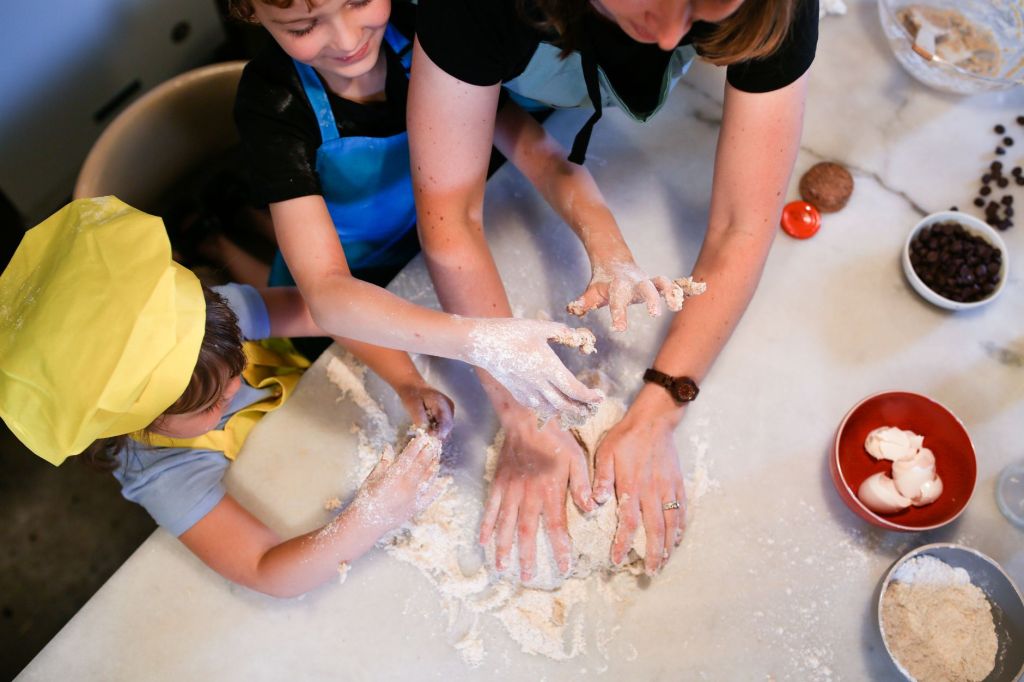
    Make a meal together and let the kids choose the menu. Look up the ingredients together, find everything you need and make sure everyone has a role in the cooking process. Then you can all sit down and enjoy something you’ve created together.

    It helps children feel a sense of responsibility, gives you the chance to teach them how to safely use kitchen utensils, and it’s a great way for older children to build a little independence too.

    Top tip: Add a little extra magic to the table. Fold some napkins, light a candle, and ask the kids to make place cards with everyone’s names on them. It’s such a simple thing, but it makes the meal feel really special.

    Get outside –

    Nature is free, y’all!

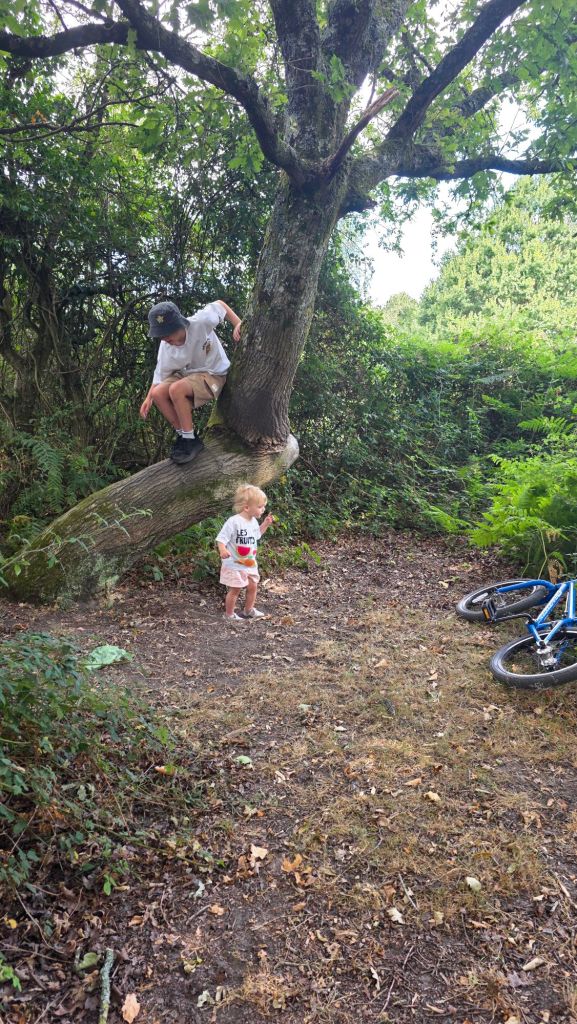
    There’s nothing better than getting outside amongst the trees. Kids love to run, climb and explore. Their little bodies need movement, fresh air and room to breathe.

    I’ve spoken before about the benefits of spending time outdoors as a family (read here). It’s also a brilliant way to get your own exercise in too. Join them with the running and climbing. Build a den, lie on the grass and watch the clouds drift by. See what shapes you can spot.

    If you’re lucky enough to live near water, go for a paddle. Skim stones, splash around, get wet, laugh and embrace the messiness of it all.

    After all, kids are washable… and so are you.

    Make a den

    My brother and I used to spend hours making dens, whether it was out in the woods or at home.
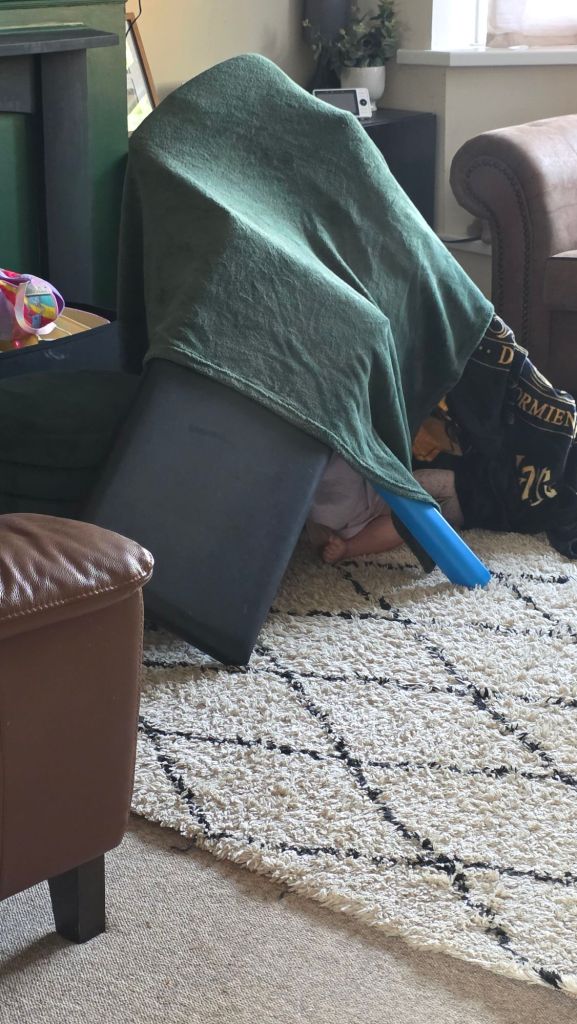
    For an indoor den, grab some blankets or sheets, a couple of chairs and build your own little fortress. Get creative, let the kids take the lead and watch their imaginations come to life.

    Let them eat their lunch inside. Let them read their books in there. Let them sleep in it if they want to.

    Those late-night chats with your siblings in a den you spent all day building are the kind of memories that stay with you forever.

    If the weather’s kind, why not build one outside in the garden too?

    Top tip: Clothes pegs are your best friend for keeping blankets and sheets in place.

    Not the best den we’ve made 😂

    At the end of the day, your children won’t remember every expensive day out or every toy you bought them. They’ll remember how they felt. They’ll remember belly laughs over a picnic, dirty feet after an adventure, the excitement of finding “treasure”, and the den that became their castle for the day.

    The best memories are so often found in the simplest moments.
    So take the pressure off yourself this summer. Slow down, say yes to the little things, and soak it all in.

    Because these are the days they’ll remember. And if we’re lucky, they’re the days we’ll remember too.

  • The New Forest: Your Summer Guide

    The New Forest: Your Summer Guide

    Following that intensely beautiful heatwave we just had, I wanted to give you a heads-up on some places to visit for when summer returns (hopefully).

    We all know parenting in the heat comes with its challenges, but I’m here to tell you that it doesn’t have to be that hard—or expensive—to keep the kids entertained during the summer holidays. It’s tricky when they’re too hot, sticky with suncream, and fussy with their food because, honestly, who wants to sit and eat when they’re hot and bothered?

    There is only so much water play in the garden you can do, and only so many ice lollies you can hand out before you start feeling like a static ice cream van while everyone slowly succumbs to cabin fever.

    That’s where the forest comes in.

    The trees provide a much-needed canopy of shade and respite from the heat, making it one of my favourite places to escape on those sweltering summer days. Forests naturally stay cooler than built-up areas because the tree canopy blocks direct sunlight from reaching the ground. Trees also release water vapour through a process called transpiration, which helps cool the surrounding air, creating a natural air-conditioning effect. Combined with shaded woodland floors and reduced heat reflection compared with roads and pavements, it can feel noticeably cooler beneath the trees even on the hottest days.

    If you’re looking for easy, family-friendly spots with parking, toilets (nature wees are absolutely OK too), picnic areas and shady trails, here are three New Forest favourites worth adding to your summer list (click the links for full information).

    1. Blackwater Arboretum (one of our favourite spots) 

    Blackwater Arboretum is perfect for younger children and pushchairs. The trails are short, accessible, and packed with interesting trees from around the world. The towering redwoods are particularly impressive and offer plenty of shade on hot days. The giant trees really make you stop and admire the magic of nature.

    What you’ll find on your visit:

    Car park

    Toilets

    Picnic benches

    Information point

    Accessible trails

    Plenty of shaded woodland

    In peak season there is a coffee/ice cream truck with some great flavours and friendly staff. 

    Water play?

    Yes, sort of. The nearby Blackwater River runs through the area and can be reached from some of the surrounding trails. While it’s not really a paddling destination, children will enjoy stopping to look at the water, spot wildlife and cross the picturesque wooden bridge. It’s a lovely place to cool off for a few minutes and break up the walk.

    The nearby Tall Trees Trail is an easy family walk and a great introduction to the forest.

    Henry under one of the giant Redwoods

    2. Bolderwood Deer Sanctuary

    If your children love wildlife, Bolderwood is hard to beat. A short walk from the car park leads to a deer viewing platform where you can often spot deer grazing in the meadow.

    What you’ll find on your visit:

    Car Park

    Toilets

    Picnic tables

    Information cabin during school holidays

    Several waymarked woodland walks

    Extensive shaded areas

    There is often an ice cream van during the busier months, although availability can vary depending on the season and weather.

    Water play?

    There are several small forest streams along some of the longer walking routes, particularly around Bratley Water. It isn’t somewhere I’d specifically visit for paddling, but it’s perfect for curious little explorers who love throwing sticks into streams, hunting for bugs and splashing at the water’s edge.

    The Deer Watch Trail is short enough for little legs while still feeling like a proper woodland adventure.

    Spotting wildlife

    3. Dibden Inclosure

    If you’re looking for a quieter corner of the New Forest, Dibden Inclosure is well worth a visit. The peaceful woodland trails wind through beautiful trees of all species, creating plenty of shade on even the hottest summer days. It’s one of those places where you can slow down, take your time and let the children explore at their own pace. Have your camera at the ready because you’ll also find some incredible views if you follow the rolling trails to the top of the famous Dibden hill.

    What you’ll find on your visit:

    Car park

    Picnic spots

    The best thing about the New Forest is that it doesn’t have to cost a fortune. A picnic, a few snacks, a football, and a change of scenery can easily fill an entire day. Core memories are made in nature. The children get space to run, climb, explore and burn off some energy, while you get a break from feeling like you’re trapped indoors managing your tiny humans. 

    Shady woodland trails

    Family-friendly walking routes

    Plenty of wildlife-spotting opportunities

    You won’t find a café or permanent kiosk, but it’s a lovely place to bring a picnic and enjoy lunch beneath the trees. Or you can venture to the nearby village of Dibden Purlieu where there is a fantastic cafe called Nova Forest Kitchen and also a Gelto shop called Arrosto if you fancy treating the children (and yourself) after your forest adventure. Both of these places serve great coffee!

    Water play?

    Not so much. There is a small pond at the bottom a Dibden hill with a little wooden bridge to cross. It’s not a designated paddling area, but it’s perfect for little adventurers who love exploring nature and skimming stones.

    One of the best things I find about Dibden inclosure is that it feels untouched still. There are parts of the forest that are so quiet and secluded if you’re willing to let the children lead you into the thick of it.

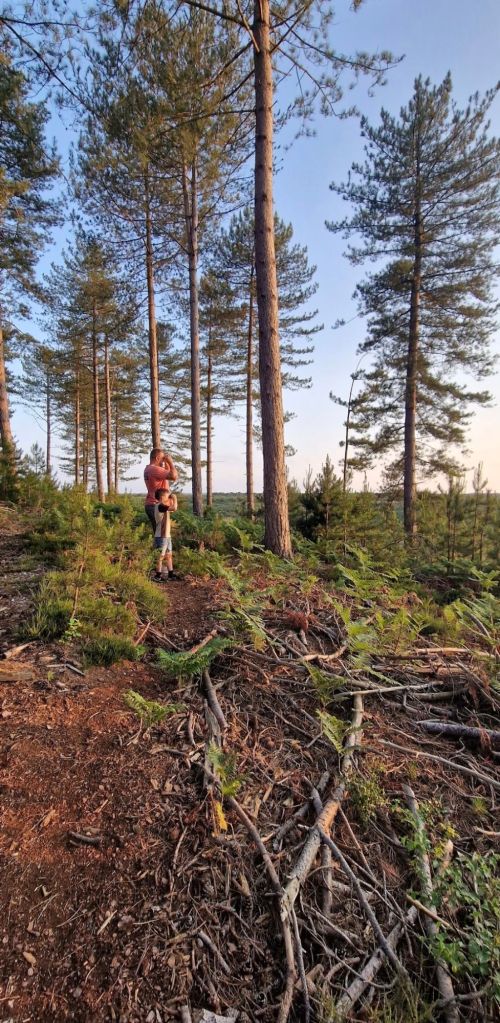
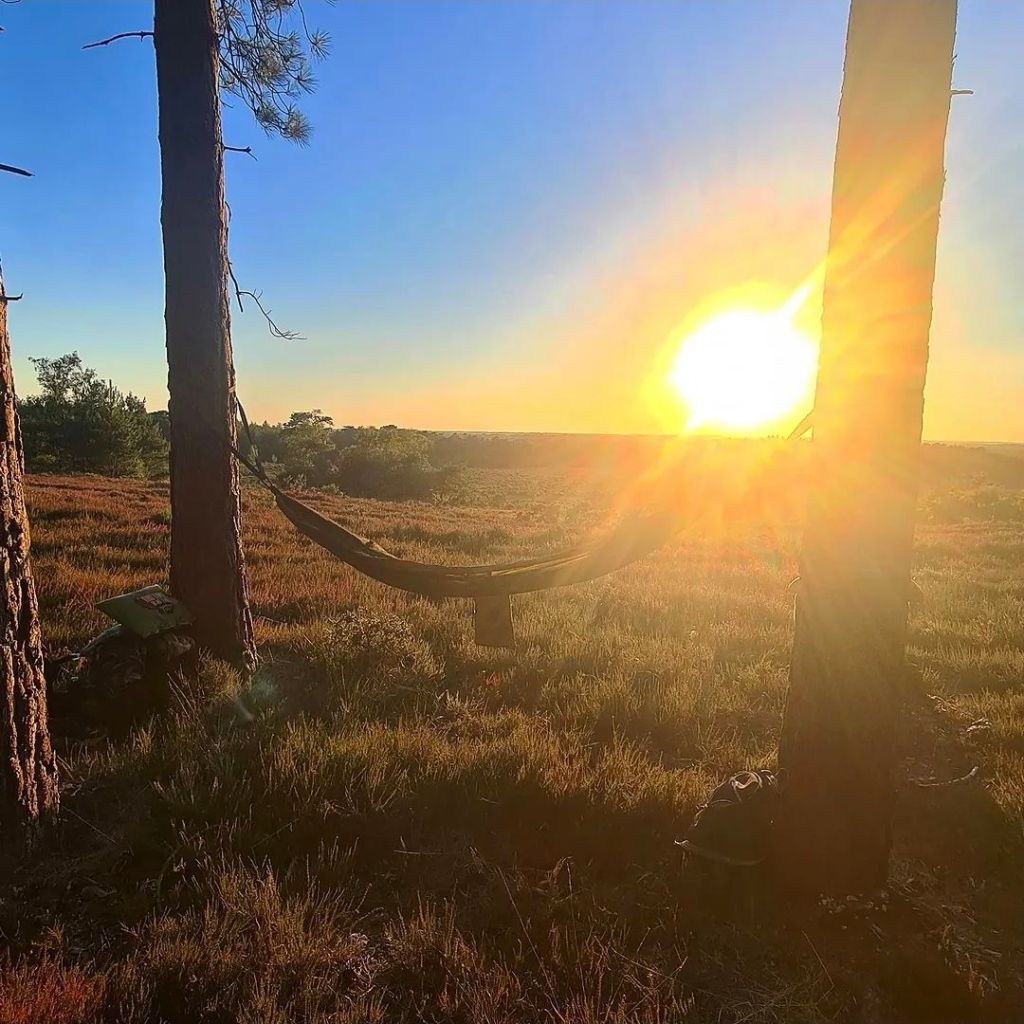
    Exploring Dibden Inclosure at sunset with our trusty hammock!

    Don’t overcomplicate it

    The best thing about the New Forest is that it doesn’t have to cost a fortune. A picnic, a few snacks, a football, and a change of scenery can easily fill an entire day. Core memories are made in nature. The children get space to run, climb, explore and burn off some energy, while you get a break from feeling like you’re trapped indoors managing you tiny humans.

    So when the next heatwave arrives and the paddling pool has lost its appeal, pack up a picnic, grab the suncream and head for the trees. You might just find that a few hours in the forest is exactly what everyone needs.

    Dibden Inclosure
  • Showing Up — For Yourself

    Showing Up — For Yourself

    It’s so easy to get wrapped up in your own life — the daily tasks, the appointments, school clubs, family birthdays, and whatever else life throws at us. But when was the last time you actually did something for yourself? Just for you?

    I’m not talking about the small things this time (self care etc) I mean something more — goals, a challenge, a qualification, or simply something that gives you a sense of self achievement.

    In the last year, I’ve really felt a shift in my sense of purpose since I started working towards things that make me feel good. My graduation was an emotional turning point. It filled me with pride and was definitely a “pinch me” moment when I walked across that stage in London to collect my graduate scroll.

    More recently, I’ve started to run. Running has opened up a whole new world for me — one with no limitations — where I’ve started pushing my body and mind to places I never thought possible. Squeezing in runs around family life and work commitments hasn’t been easy, but I’ve made it work somehow. I think it really comes down to mindset and discipline when it comes to exercise and goal setting. Getting it done feels good, but getting to it can be hard. You have to push past the “I don’t want to,” because on the other side, you’ll find “I’m glad I did that.”

    Today, I’m sitting here after completing my first half marathon this weekend, and I feel completely alive. Whether that’s a runner’s high, I don’t know — but I can definitely feel a change in myself. The need for more just grows with every goal I surpass.

    And those goals? They don’t have to be huge. Big or small — a goal’s a goal, right?

    Some days I think, “I’d really like to paint something,” so I do — goal achieved.

    Some days I think, “I’m going to rearrange my living room,” so I do — goal achieved.

    Some days I think, “I fancy booking a 21k race and running it,” so I do — goal achieved.

    The pattern here isn’t the goal itself — it’s the doing.

    You could set yourself a list of goals that are amazing to have, but unless you start ticking off the smaller ones, the big ones just feel out of your reach — and that can set you up to fail before you’ve even started.

    Life is short. If you want to do something, do it.

    I understand that things can get in the way of your goals — money, time, resources. So be realistic. Don’t set yourself up with something completely out of reach. Set goals that, deep down, you know you can achieve with a bit of blood, sweat, and tears.

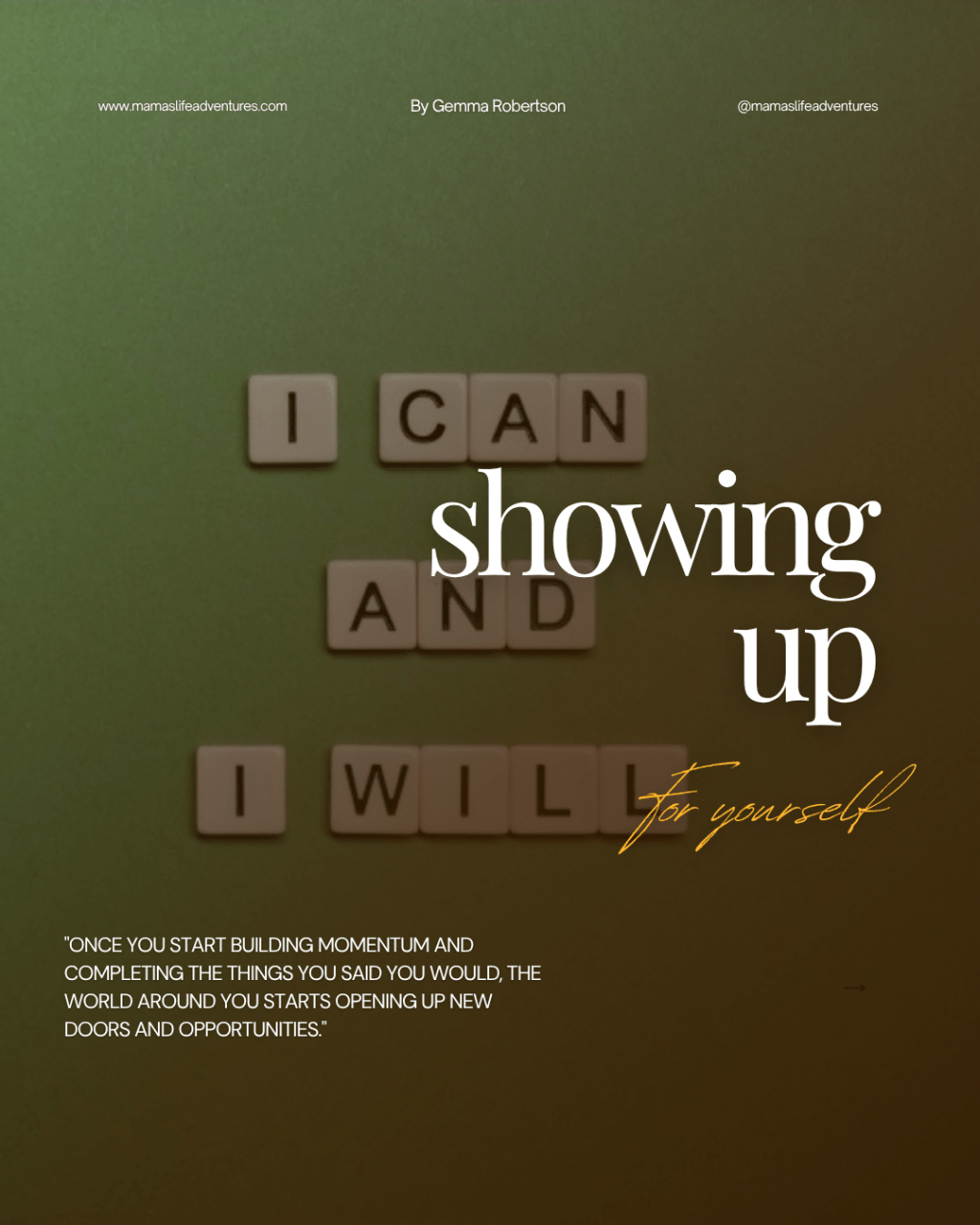
    Because who knows? Once you start building momentum and completing the things you said you would, the world around you starts opening up new doors and opportunities.

    Create the life you want. Don’t sit back and wait for things to happen — make them happen.

    Do it for yourself. Because when you start showing up for yourself, you show up better for your family too. You bring more positivity, more confidence, and you set an example for others who might be waiting for their moment to start.

    Maybe this is it.

  • Go outside – Nature heals

    Go outside – Nature heals

    We aren’t wired to sit inside all day.

    As humans, we need sunlight on our skin, fresh air in our lungs, the rustle of trees and the sound of birdsong. These things aren’t luxuries—they’re essential.

    Time outdoors brings us back to ourselves. It grounds us, steadies our thoughts, and reminds us that we’re part of something bigger. Quite simply, nature helps us feel human again.

    Why the Outdoors Matters for Our Health

    Spending time outside doesn’t just feel good—it has real, measurable benefits for both our mental and physical wellbeing. Here’s why:

    Boosts mood and reduces stress – Exposure to natural light helps regulate our circadian rhythms and increases serotonin levels, which can improve mood and reduce anxiety. Even a short walk outdoors can lower cortisol (the stress hormone).

    Improves focus and mental clarity – Nature gives our overstimulated minds a break. Studies show that time in green spaces can improve concentration, creativity, and even memory—for both adults and children.

    Supports physical health
    Fresh air and movement go hand in hand. Whether it’s walking, climbing, or simply exploring, being outdoors encourages gentle exercise, supports heart health, and can improve sleep quality (meaning the little sleep that parents and children do get, is more restorative).

    Strengthens the immune system – Exposure to natural environments—especially woodland areas—has been linked to improved immune function, thanks to cleaner air and beneficial plant compounds. So there’s no harm in letting your little ones dig around in the mud collecting sticks and stones!

    There’s also something powerful about physically connecting with nature. Touching soil, trees, and plants isn’t just sensory—it can trigger real chemical responses in the body. Soil contains a natural microorganism called Mycobacterium vaccae, which research suggests can stimulate the release of serotonin, helping to lift mood and promote a sense of calm. Similarly, contact with plants and trees exposes us to natural oils and compounds—often called phytoncides—that have been linked to reduced stress levels and improved immune function. Even something as simple as walking barefoot on grass or running your hands through leaves can help regulate the nervous system, lowering stress and creating a feeling of balance.

    Living in the New Forest National Park, we’re incredibly lucky to have nature right on our doorstep. Long woodland walks, open skies, and winding trails are part of our everyday life. We spend hours wandering, noticing the seasons change, and letting the children explore freely. But I know that not everyone has access to forests or open countryside—and that’s okay. There are other ways to enjoy the outside no matter where you live.

    How to Bring the Outdoors to You

    Even if you live in a city or don’t have easy access to green spaces, there are simple ways to recreate those benefits wherever you are:

    Create a mini green space at home – Add plants to your home, balcony, or garden. Even a few pots of herbs or flowers can make a difference. Caring for plants can be calming and grounding in itself.

    Prioritise natural light – Open curtains, sit near windows, or take breaks outside during the day. Morning sunlight in particular helps regulate sleep and boost energy levels.

    Bring nature to your routine – Walk a different route to school, visit a local park, or spend time outside after dinner. Small, consistent moments outdoors add up.

    Engage your senses – Play nature sounds, light a natural candle, or use essential oils like pine or eucalyptus. It might sound simple, but sensory cues can help mimic the calming effects of being outdoors.

    Slow down and notice – Whether it’s watching clouds, listening to birds, or feeling the wind, take a few minutes to be present. Nature isn’t just a place—it’s a mindset we can access anywhere.

    Why the Outdoors is So Important for Children

    Children are naturally drawn to the outdoors—it’s where their curiosity thrives. Giving them time outside isn’t just beneficial, it’s vital for their development. Here’s why:

    Encourages imagination and creativity – Nature doesn’t come with instructions. A stick becomes a wand, a den, or a fishing rod. Outdoor play sparks creativity in ways screens simply can’t.

    Builds confidence and resilience – Climbing trees, navigating uneven ground, and exploring new spaces help children learn their limits, solve problems, and build independence.

    Supports emotional wellbeing
    Time outdoors can reduce anxiety, improve mood, and help children regulate their emotions. It offers space to breathe, move, and simply be.

    At its heart, spending time outdoors isn’t about grand adventures or picture-perfect days. It’s about small, meaningful moments—muddy boots, rosy cheeks, shared laughter, and quiet pauses under open skies.
    Wherever you are, there’s always a way to step a little closer to nature.

    And sometimes, that’s exactly what we need.

    Further Reading & Sources –

    Research has shown that a natural soil bacterium (Mycobacterium vaccae) may help boost serotonin levels and support mood regulation.
    (Lowry et al., 2007)

    Studies on “forest bathing” have found that trees release natural compounds (called phytoncides) which can reduce stress and support the immune system.
    (Li, 2010)

    Large reviews of multiple studies confirm that regular access to green space is associated with better physical and mental health.
    (Twohig-Bennett & Jones, 2018)

    Spending time in nature has been linked to reduced stress, lower anxiety, and improved mental wellbeing.
    (Bratman et al., 2015)

    Time outdoors can also improve focus, memory, and overall cognitive function.
    (Berman, Jonides & Kaplan, 2008)

    Even simply seeing natural environments has been shown to support healing and recovery.
    (Ulrich, 1984)

  • Screen free – Family time

    Screen free – Family time

    If you’ve ever sat in a restaurant, looked around, and noticed how many little faces are lit up by screens instead of conversation—you’re not alone. It’s become the norm, hasn’t it? And with the UK government recently introducing new guidance around children’s screen use, it’s clearly something many of us are thinking about. The advice suggests no screen time at all for children under two (aside from things like video calls), and limiting it to around an hour a day for those aged two to five. It also encourages families to avoid screens during meals and instead focus on interaction—talking, playing, and spending time together. And honestly, that part really resonates with me. Time spent at the table with my family is precious to me.

    We’re deep in the digital age. Our children are surrounded by screens whether we like it or not. At home, at school, and almost everywhere in between, as well as seeing adults glued to their phones. While technology has its place, it also has the potential to impact their mental health if we’re not mindful. We know how too much screen time affects us as adults so imagine what it’s doing to a young person’s brain!

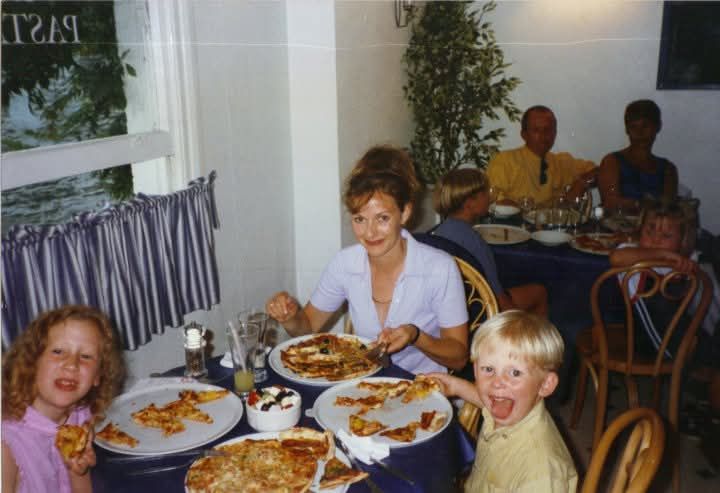
    As someone born in 1990, I’ve watched technology evolve rapidly. But I was also lucky enough to grow up in a time when screens weren’t part of family gatherings, dinner tables, long journeys, or meals out. Some of my fondest memories are of meals out and holidays with my family—trying new foods, meeting new people, and just being part of the world around me.

    Me, my brother and mum 1996

    My mum used to say, “Use your manners, let’s pretend we’re eating at the Queen’s house.” My brother and I would sit up straight, pinkies raised as we sipped our drinks, fully committed to the idea that we were in royal company. It was simple, a bit silly—but it made those moments feel special, and they’ve stayed with me.

    My dad was always the one encouraging us to be brave with food—especially seafood. On holidays, he’d show us how to peel prawns or debone fish. Things that might make some children squirm somehow fascinated us. It turned meals into little adventures and made trying new things feel exciting rather than intimidating.

    Of course, it would be naïve to think we can eliminate screens from our children’s lives completely. The world is digital, and they need to be confident using technology. Screens can educate, inspire, and support learning—so rather than seeing them as a hindrance, it’s more helpful to think of them as tools. Tools we can pick up and put down with intention. Teaching children that balance is invaluable.

    But what we shouldn’t do is let devices replace human interaction. Let them experience the world—and see you experiencing it with them. Bring them along with you, share what you love, and show them the world through real experiences. Accept that things will look different with children in tow. Swap long, uninterrupted dinners for noise, laughter, mess, and the occasional meltdown.

    Dining Out Without Screens

    If you’re heading out for a meal with children, it helps to reset your expectations. A calm, uninterrupted dinner might not be realistic—and that’s okay.
    Restaurants are full of stimulation: new faces, sounds, lighting, music, and décor. It’s natural for children to want to explore. Let them. Follow their lead (safely), show them things, and embrace their curiosity.

    Here are a few things that help us when dining out as a family:

    Come prepared
    Pack small activities—toys, colouring, or fidget items. They’re great for keeping little hands busy while waiting for food.

    Choose your timing wisely
    Avoid booking too late, especially for evening meals. Tired children and long waits rarely mix well. Earlier sittings are often quieter and quicker.

    Make the table interactive
    Play simple games like “What can you see?” or “What can you smell?” Tailor it to your children’s ages—we have a one-year-old and a ten-year-old, so creativity is key!

    Let them explore
    With younger children, take a walk around. Let them get familiar with the space, say hello, and practise simple manners like smiling, waving, and saying “please” and “thank you.”

    Give older children responsibility
    Encourage them to read the menu, choose their meal, and even order it themselves. It builds confidence and independence.

    Share food
    Ordering picky bits or tapas-style dishes makes it easier for everyone to try new things. It also works well when meals are interrupted by the occasional wander.

    Take turns
    If there are two of you, swap roles—one engages with the children while the other gets a moment to sit and relax.
    Follow their energy
    Let them move, laugh, and explore. Children mirror your mood—if you’re stressed, they’ll feel it too.

    Pause and take it in
    Every now and then, sit back, sip your drink, and soak it all up. These are the moments they’ll remember. Be sure to cheers with your family too! Every outing should be celebrated.

    A Gentle Reminder

    It’s also important to remember that every family is different. It’s easy to look around and make quiet judgements when you see children with screens at the table or on outings—but the truth is, you don’t know their reasons or their circumstances. Focus on your own family, your own values, and what works for you. And be kind—to others and to yourself. The world needs more of that.

    When It Doesn’t Go to Plan

    Sometimes it won’t. There might be tears, tantrums, or food everywhere. You might find yourself crawling under the table, quietly cleaning up the aftermath. But that’s part of it.

    Consistency is key.

    Choosing to leave devices behind during family outings creates space for connection. The more you go screen free, the more it becomes the norm. Your children will look back on the moments you spent together and thank you.

    The Bit That Matters Most

    One day, these dinners won’t be noisy. There’ll be no crayons rolling off the table, no little voices asking a hundred questions, no tiny hands reaching for yours. And you won’t remember the meals where everything went perfectly—you’ll remember the ones filled with laughter, chaos, and connection. So leave the screens behind when you can. Be present. Let them explore, make a mess, ask questions, and be part of your world.
    Because that’s where the magic is.

  • Slowing Down This Easter

    Slowing Down This Easter

    The Easter holidays have arrived. No school runs for two weeks—hoorah!

    But does anyone else feel a little derailed by the change in pace? Suddenly, the diary begins to fill with trips here, there, and everywhere. Playdates roll in, and the “keep them entertained” activity list starts piling up along with the chocolate eggs!

    This year, I’m taking a different approach. A slower one.

    It’s rare that we get to enjoy slower mornings without needing to be up, ready, and out the door by 8am. I’m choosing to see this time as a break—a chance to rest and move at a gentler pace. Yes, I still have to work, exercise, plan meals, and keep the house in order, but there’s no rush.

    And actually, our children deserve this break too. A break from the school routine, from being hurried out the door, from structured learning. This is their time to take a breath and just be. To be at home with you. To watch, observe, and learn in a different way.

    I know I’m lucky to have work that fits flexibly around my family, and I’m aware that not everyone has that luxury. But here are a few small, simple things you can do during the school break to make it feel a little more special—most of them at no cost.

    A morning in bed
    Not the whole morning, but perhaps 30 minutes before you all get up. Let your children climb in, cuddle, and chat. No rushing—just being present.

    A special breakfast
    Something you wouldn’t usually have on a school day. Make it together—chop some fruit, scramble some eggs—and sit down to eat as a family. If time is tight, prep something the night before or wake slightly earlier. These are the moments they’ll remember.

    A walk a day
    Head out for a walk around your local area and see what you can discover together. Whether it’s short or long, it all makes a difference. Fresh air really is good for the soul.

    Plant some seeds
    It’s the perfect time of year to grow something together. Sunflowers are a great choice—plant one each and see whose grows the tallest!

    Let them choose
    Give them a few dinner options for the week and let them write the menu. Involve them in the process and let them help prepare the meals they’ve chosen. It builds independence and gives them a sense of purpose.

    Three facts a day
    Each evening, ask your children to share three facts about their day. We’ve done this for a while now—it’s often entertaining and gives you a glimpse into their world from their perspective.

    These are simple things, but they can make the holidays feel special—and you might even carry them into everyday life.

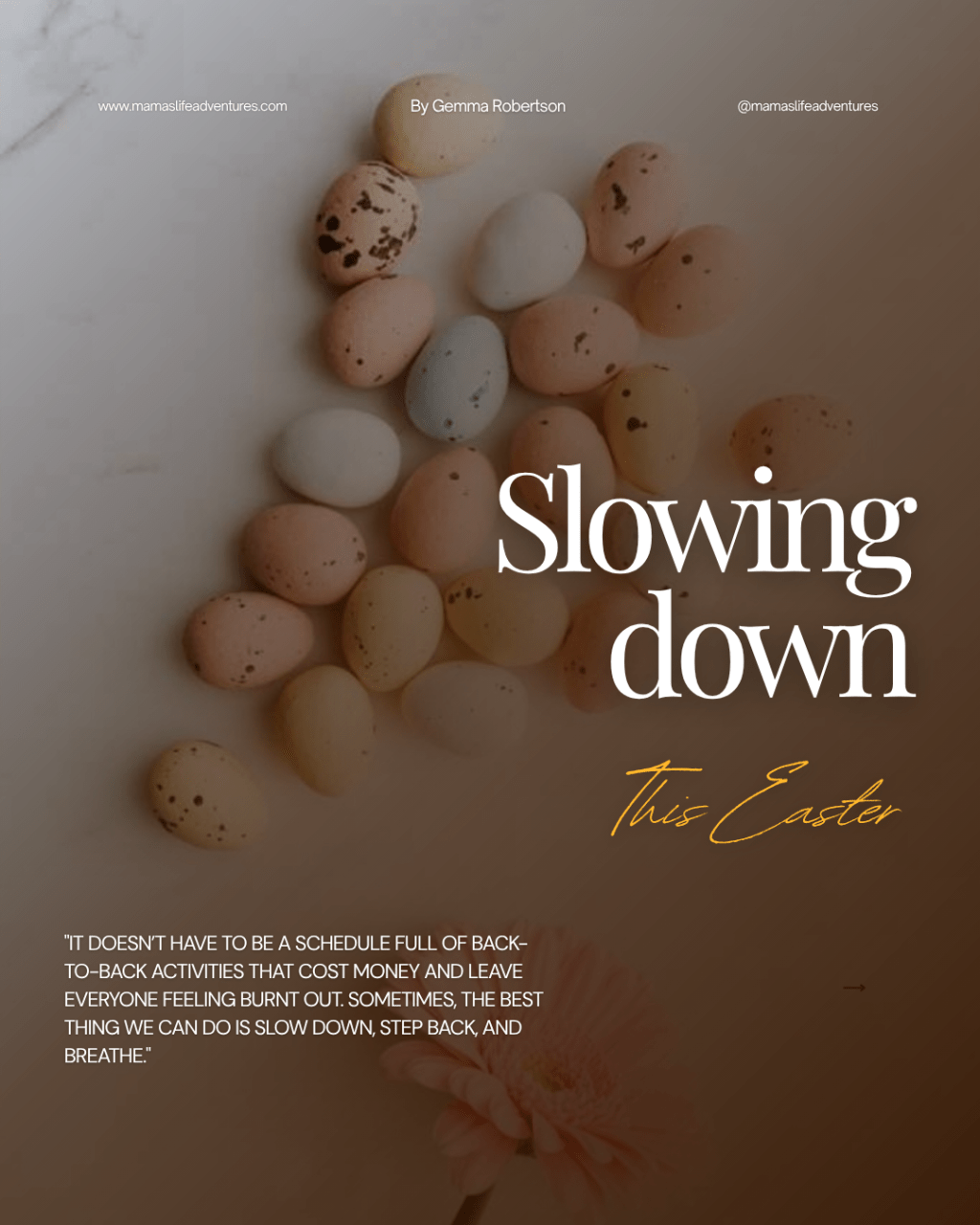
    It doesn’t have to be a schedule full of back-to-back activities that cost money and leave everyone feeling burnt out. Sometimes, the best thing we can do is slow down, step back, and breathe.

    I have a busy week ahead with work, family birthdays, and visitors—but I’m starting as I mean to go on: calm, present, and unrushed.


    And if everything doesn’t go to plan, that’s okay too. Some days will feel calm and connected, others might feel a little chaotic—and that’s all part of it. I’m reminding myself not to chase perfection, but to notice the small, quiet moments in between. The cuddles, the conversations, the slower pace. Because really, that’s what this time is about. Slowing down, soaking it in, and just being together.

  • Stepping Back Outside: Embracing the Slow Return of Spring

    Stepping Back Outside: Embracing the Slow Return of Spring

    It’s time to dust off the walking boots and get back outside. It’s been a long, wet and windy winter, and for some reason this year it felt harder than usual. Time spent inside can become taxing on your mental health, and when the weather doesn’t allow for outdoor adventures, the feeling of being cooped up can become overwhelming—especially when you have little people to entertain.


    The Gentle Shift Into Spring

    The remnants of winter are still very much present. The mud, the semi-naked trees, the cold nip in the air, and the unexpected rain showers haven’t quite left us yet. But day by day, the sun is creeping back in, bringing light with it. Flowers are beginning to bloom, blossom is blossoming, and the days are slowly stretching out.

    At the same time, there’s that growing urge to get the garden “summer ready” and refresh your wardrobe with something more weather-appropriate. Before you know it, the to-do list starts to spiral, and that sense of overwhelm creeps back in.
    Slow Down and Soak It In
    Coming out of hibernation shouldn’t be rushed. As humans, we need time to adapt to changes in our environment.


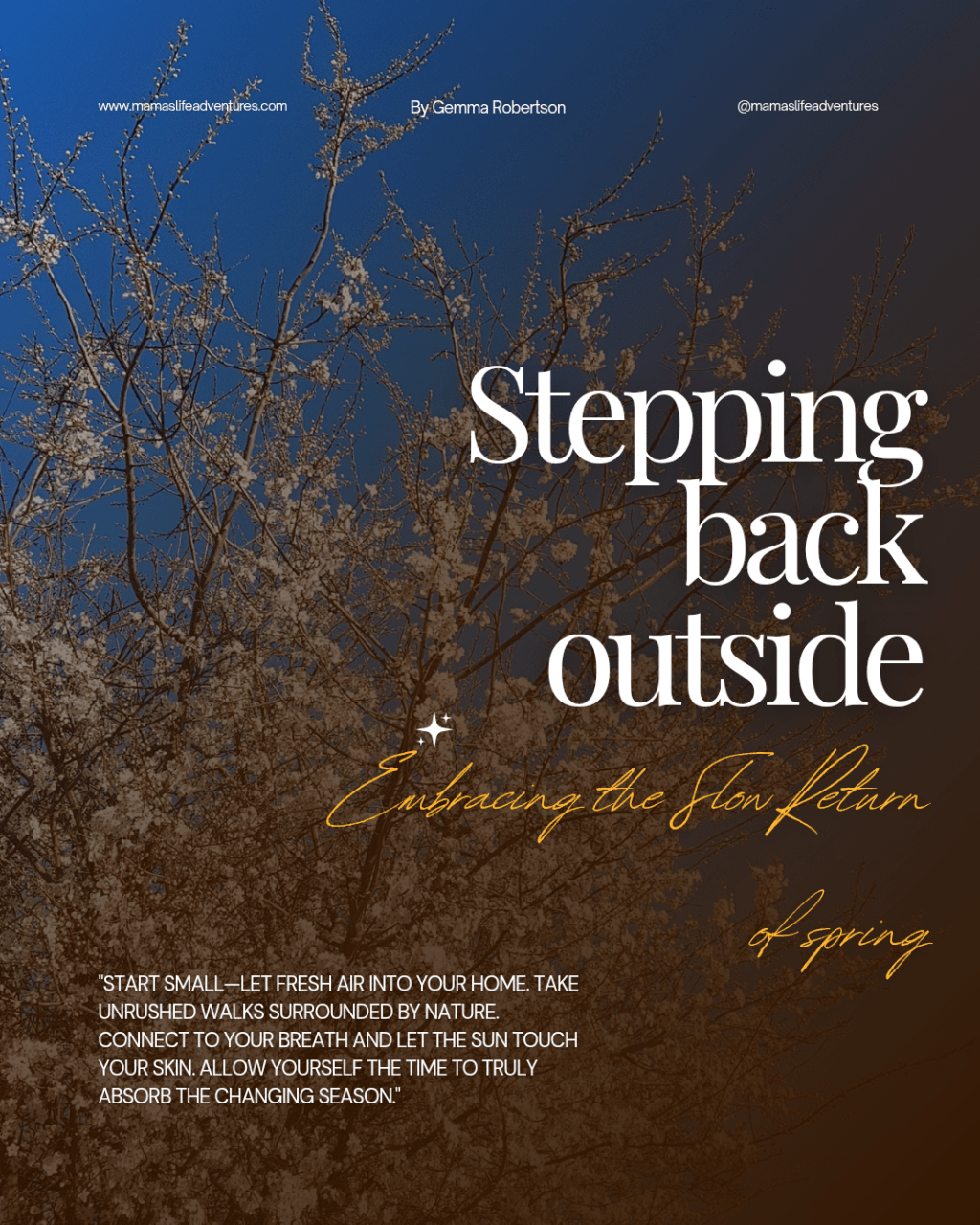
    Start small—let fresh air into your home. Take unrushed walks surrounded by nature. Connect to your breath and let the sun touch your skin. Allow yourself the time to truly absorb the changing season.


    When you get outside with your little ones, watch their faces as they take in the new sights and smells that spring is offering. Move, stretch, and listen to what your body needs. Your children are always watching and learning from you. One of the greatest things you can teach them is self-awareness and how to be kind to themselves.


    Finding Joy Close to Home


    Living in the New Forest National Park, we feel incredibly lucky to be able to wander straight into the forest and explore. There’s something so special about watching the woodland come back to life at this time of year.


    Here are a few simple things we like to do as a family to help shake off the winter blues:


    1. Start the Day with Sunlight
    We open the curtains first thing and watch the birds. Morning light helps regulate our circadian rhythm—our natural body clock—and sets the tone for the day ahead.


    2. Make Time for a Daily Walk
    Walking has so many benefits, but at this time of year it feels especially powerful. It lifts your mood, boosts energy levels, and gently eases you out of that winter slump.


    3. Prioritise Sleep
    We try to keep a regular bedtime and wake-up routine, which again supports our circadian rhythm and helps us feel more balanced. Of course, this isn’t always perfect (especially with a teething one-year-old), but consistency where we can manage it makes a big difference.


    A Season to Reconnect


    Spring isn’t something to rush into—it’s something to grow into. Let it unfold slowly, just as nature does. There’s no need to do everything at once. Open a window, take a walk, pause in the sunlight, and let yourself adjust.


    The garden can wait. The wardrobe can wait. What matters most is how you feel as you step back into the world again—grounded, present, and ready in your own time.

  • A pre Christmas break in the New Forest

    A pre Christmas break in the New Forest

    Ormonde House Hotel

    A Winter Escape at Ormonde House Hotel, Lyndhurst

    Highlights from our stay

    Tucked beside the gentle edges of the New Forest National Park, where wild ponies wander past and the trees seem to exhale calm, Ormonde House Hotel is the kind of place that immediately slows your pace. It’s close enough to Lyndhurst’s high street for convenience, yet close enough to the forest that you can be among the trees within minutes. It’s comfort and countryside side by side — exactly what you want from a short winter break.

    Our room for the night (room 6)

    From the moment we arrived, the atmosphere was warm and welcoming. All the staff were friendly, the service was fantastic, and as a family travelling with a baby, we instantly felt looked after. Our little Ivy had everything she needed, from a travel cot in the room to a highchair waiting at breakfast. It made our stay feel easy and stress-free — a huge win for any parent. She slept literally like a baby too, so we know she felt comfortable.

    Ivy loving the hotels Christmas tree

    Where the Forest Adventure Begins

    The New Forest spreads out from the hotel’s doorstep like an invitation. You can wander through ancient woodland, spot ponies at the roadside, or simply enjoy the fresh air as you stroll along quiet paths. Whether you’re an enthusiastic hiker, a casual walker, or a family looking for gentle outdoor adventures, this area has something for everyone.

    Sundays Hike

    Festive Forest Feels

    Visiting during the festive season adds an extra layer of charm.

    Ivy and Daddy enjoying the Christmas displays

    During our stay, we enjoyed the Christmas light switch-on in Lyndhurst. A couple of mulled wines and a firework display later, we headed to The Forage for a delicious wood-fired pizza and Ivy’s favourite – Spaghetti bolognese! The ideal comfort food for a winter evening and the staff were very attentive. Back at the hotel, we wrapped up the night with a hot drink and some quiet time — simple, cosy, and exactly what we needed before the busy Christmas rush. We even watch The Snowman in bed with Ivy and seeing her little face filled with excitement was precious.

    A Pre-Christmas Escape Worth Taking

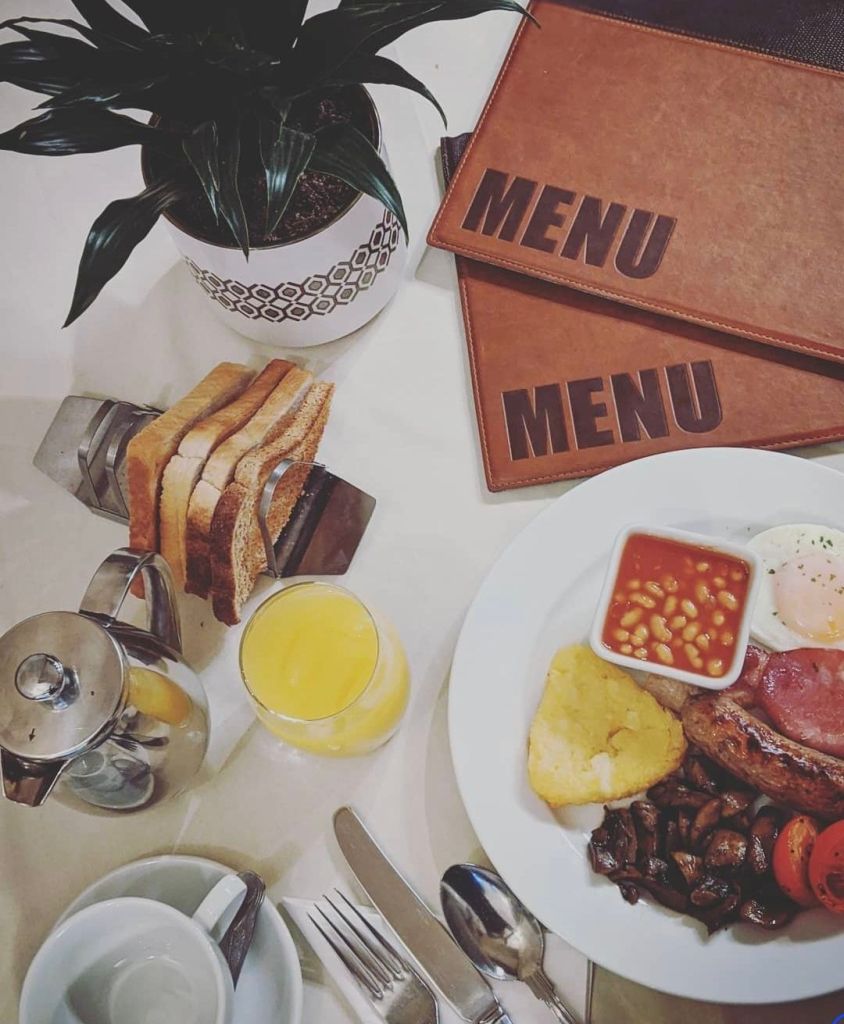
    If December tends to feel frantic, this is the kind of escape that helps you reset. Mornings at Ormonde House start slowly, with spot-on coffee and a hearty breakfast to ease you into the day. Even with a baby in tow, everything felt calm and manageable.

    Photo credit – Ormonde House Hotel

    Afternoons can be spent exploring the forest, browsing local shops, or dipping in and out of festive events. Evenings are peaceful — relax with a drink in the hotel bar, a perfect chance to unwind before heading back into the whirlwind of the holidays.

    It’s a getaway that reminds you how important it is to pause, breathe, and reconnect — with nature, with each other, and with yourself.

    A Reason to Return

    After a relaxed wintery morning, I joined the winter launch of New Forest Hikes — a guided walk that now runs regularly from the hotel. Starting and ending right at the front door, it’s an ideal activity for anyone wanting to explore the forest more deeply.

    Sundays hike

    Our guide, Amy, was brilliant. She knows the New Forest so well and took us along routes we never would’ve found on our own. Her passion for the area — and her fascinating backstory — made the experience even more memorable. If you’re staying at the hotel when one of her hikes is running, I’d highly recommend joining.

    With the staff’s kindness, the hotel’s comfort, the AMAZING post hike cake and coffee and the surrounding forest’s charm, we left feeling refreshed and already talking about the next hike on the 14th of December.

    Stay Connected & Book Smart

    Call to book directly –
    📞 Ormonde House Hotel: 023 8028 2806

    If you’d like to keep up with upcoming forest events, future guided hikes, and latest offers, be sure to follow both New Forest Hikes and Ormonde House Hotel on Instagram. It’s the easiest way to stay in the loop — and to benefit from any exclusive offers available when booking directly through the hotel.

    The hotel are also running a Giveaway! Follow the link below to enter 👇

  • The Slow Cooker — A Cheat Code for Parents

    The Slow Cooker — A Cheat Code for Parents

    The slow cooker is my speciality 🤣

    I don’t know about you, but deciding what to have for dinner every single day can be tedious. Don’t get me wrong — I love cooking. Feeding people has always been a kind of therapeutic practice for me. There’s something so fulfilling about putting love into food and watching it put smiles on faces.

    But when you’re in the midst of a crazy busy week — juggling work, school runs, laundry mountains, and a never-ending to-do list — cooking can stop feeling like therapy and start feeling like just another chore.

    Let’s be honest: time and parenting go together about as well as toddlers and white sofas. Between packed schedules and the nightly “what’s for dinner?” interrogation, the idea of calmly preparing a wholesome meal can feel like a fairytale.

    Enter the slow cooker — the unsung hero of family life and the best friend of anyone trying to keep the weekly shop on budget. You throw in a few ingredients before the day begins (or the night before), and by the time you’re home, your house smells like comfort. It’s basically culinary witchcraft, minus the cauldron — and bonus points, it’s cheaper than a takeaway (and healthier).

    Why the Slow Cooker Is Every Parent’s Secret Weapon

    Less decision fatigue. Dinner’s sorted before breakfast is over.

    One pot, minimal mess. Because who has time for a sink full of dishes?

    Budget brilliance. Cheaper cuts, tins, and cupboard staples become hearty family favourites.

    Family togetherness. Dinner’s ready, the table’s set (well, mostly), and everyone can actually eat together — screens off.

    So dust off that slow cooker and let’s dive into three recipes (beef, mince, and chicken) that busy, budget-savvy parents will love.

    Jump to Recipe

    1️⃣ Slow Cooker Beef Stew (BBC Good Food)
    2️⃣ Slow Cooker Chilli con Carne (BBC Good Food)
    3️⃣ Marry Me Chicken Pasta (Taming Twins)

    Photo credit BBC Food

    1. Slow Cooker Beef Stew (The Classic Crowd-Pleaser)

    BBC Recipe Link: 👉 Slow Cooker Beef Stew — BBC Good Food

    This is the kind of recipe that makes your home smell like a hug. Tender beef, soft carrots, herbs, and a gravy so rich it feels like a reward for surviving another weekday.

    Why parents love it:

    Works perfectly with affordable cuts (braising or stewing beef).

    Feeds a crowd — and leftovers freeze beautifully.

    Sneak in any veg you like — picky eaters rarely notice!

    Parent hack: Make double and freeze half for next week’s “I can’t even” day.

    Photo credit BBC Food

    2. Slow Cooker Chilli con Carne (The Family Favourite)

    BBC Recipe Link: 👉 Slow Cooker Chilli con Carne — BBC Good Food

    This one’s a total lifesaver: hearty, filling, and adaptable for the whole family. Mild for the kids (unless they like the heat, mine do!), spicy for the grown-ups — and it tastes even better the next day.

    Why it’s brilliant:

    Uses store-cupboard staples and inexpensive mince.

    Makes enough for lunchboxes or leftovers.

    Serve with some grated cheese, sour cream and nachos, if you’re feeling fancy!

    Photo credit – Taming Twins

    3. “Marry Me” Chicken Pasta (Taming Twins)

    Recipe Link: 👉 Marry Me Chicken — Taming Twins

    The name says it all — creamy, dreamy, and just romantic enough that you might fall in love (with your dinner). This BBC Good Food favourite is usually made on the hob, but it adapts beautifully to a slow cooker for hands-free comfort.

    Why it’s perfect for parents:

    Rich in taste, costs little.

    Chicken thighs or breasts both work.

    The sauce clings to pasta like a culinary love story.

    Serving tip: Add spinach for extra colour and nutrients (bonus points if your kids don’t pick it out).

    No slow cooker? No problem! Here are three budget-friendly options that will have you slow-cooking like a pro in no time:

    1. Crock-Pot CSC080 Slow Cooker
    Price: £14.99
    Capacity: 1.8L (Serves 1-2 People)
    Why it’s great: Compact and energy-efficient — perfect for smaller households or singles.
    Link: Amazon UK

    2. Daewoo 3.5L Slow Cooker
    Price: £20.99
    Capacity: 3.5L
    Why it’s great: Large enough for families, yet still affordable.
    Link: Amazon UK

    3. Morphy Richards Evoke Sear & Stew Slow Cooker
    Price: £29.99
    Capacity: 3.5L
    Why it’s great: Stylish design with a sear function — cook your meat before slow-cooking for extra flavour.
    Link: Amazon UK

    You Can Literally Chuck Anything in a Slow Cooker

    Recipe or not, it always seems to turn out well! (For me anyway… I’m not sure my partner would say the same!) The slow cooker is wonderfully forgiving. Leftover veg, a random tin of beans, a forgotten chicken breast — toss them in, add some seasoning, and let it work its magic. Dinner’s served, and your creativity gets a pat on the back.

    Slow Cooker Success Tips for Busy, Budget-Savvy Parents

    Prep ahead. Chop and measure the night before.

    Use cheaper cuts. Chicken thighs, beef shin, or turkey mince — all perfect.

    Don’t overfill. Leave space for simmering magic.

    Batch cook and freeze. One effort, three future dinners.

    Shop smart. Frozen veg and tins work wonders.

    Eat together. Even if it’s noisy, messy, or someone’s still in uniform — it counts.

    The slow cooker doesn’t just save time; it saves money, energy, and your sanity. It turns affordable ingredients into meals that feel like home — and gives you the one thing we all crave most: a quiet moment to breathe (and maybe even sit down).

    Final Thoughts

    With winter creeping in, there’s no better time to let your slow cooker shine. It’s comforting, budget-friendly, and basically the culinary equivalent of a warm hug. Toss in your ingredients, press a button, and let dinner take care of itself — because, let’s face it, you’ve earned it!

    Disclaimer: As an Amazon Associate, I earn from qualifying purchases. This means that if you click on a link to a product and make a purchase, I may receive a small commission at no extra cost to you. This helps support my blog and allows me to continue sharing honest reviews and recommendations. Thank you for your support!