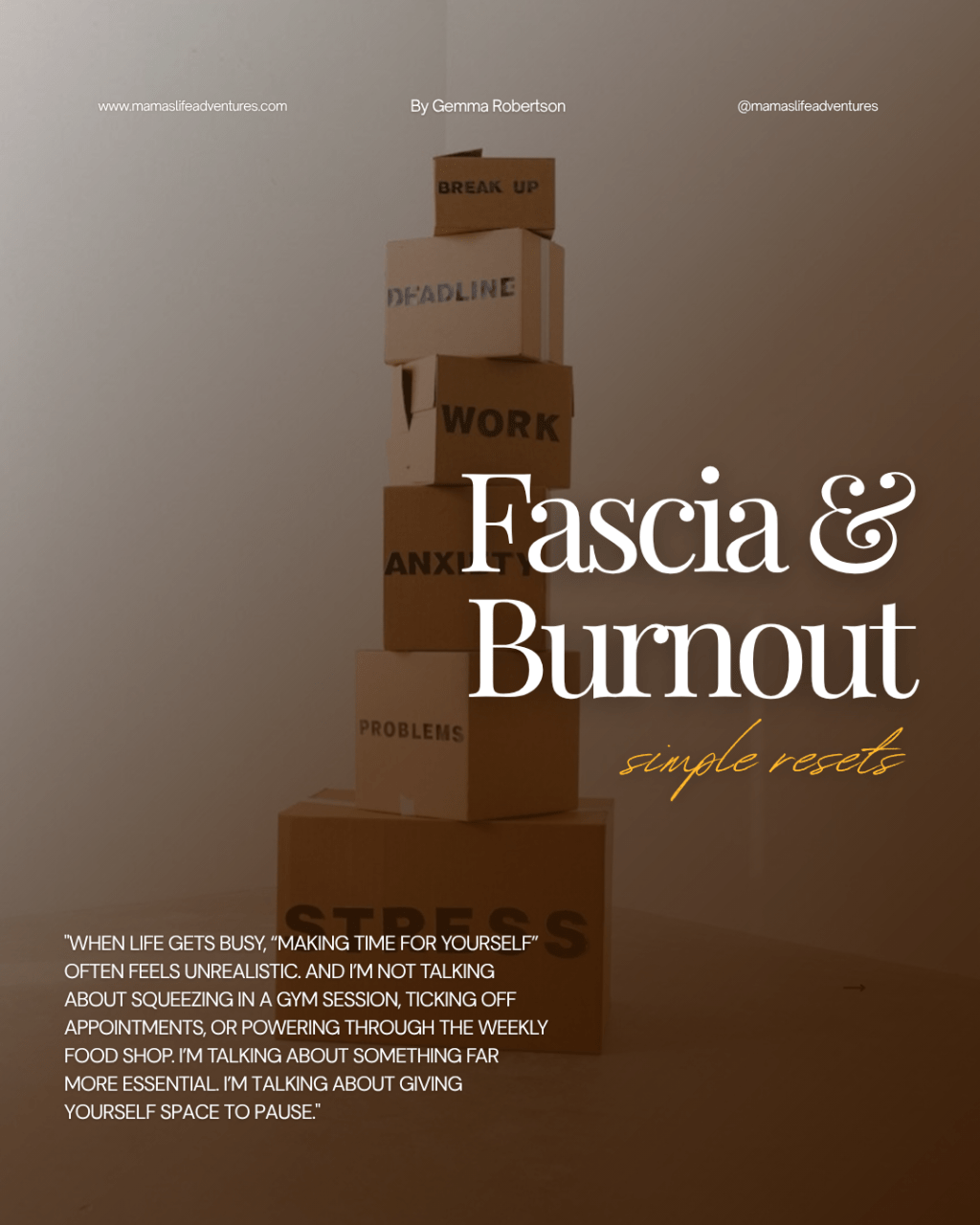
We’ve all been there—running on empty after weeks (or months) of constantly being on the go. The mental load, the physical exhaustion, the never-ending to-do list. I’m feeling it now too—that quiet but persistent sense that burnout is just around the corner.
When life gets busy, “making time for yourself” often feels unrealistic. And I’m not talking about squeezing in a gym session, ticking off appointments, or powering through the weekly food shop. I’m talking about something far more essential.
I’m talking about giving yourself space to pause.
Moments to reset your nervous system.
Moments to let your mind soften.
Moments to allow your body to fully relax and regenerate.
This doesn’t require spa days or extra hours of sleep (though those are always a bonus when they happen). It’s about small, intentional practices—deep breathing, stillness, gentle awareness—that help your body come out of survival mode and return to balance.
The Fascia
Let’s talk about something we don’t often think about: fascia.
What’s that, you ask?
Fascia is a continuous web of connective tissue that runs throughout your entire body. It’s quite incredible—it wraps around your muscles, organs, bones, and nerves, holding everything in place while also allowing movement and flexibility.
Think of it as both your body’s support system and its communication network. When you’re stressed, physically or emotionally—your fascia can tighten and become restricted. This can lead to stiffness, discomfort, fatigue, and that heavy, “worn down” feeling so many of us carry without even realising it. Many people can relate to this, and as a parent, exhaustion is certainly not a foreign concept.
Fascia is also closely linked to your nervous system. When you’re stuck in a constant state of stress (fight or flight), your fascia reflects that tension. It becomes less elastic, less hydrated, and less able to support easeful movement and recovery.
The good news? Fascia responds beautifully to slow, mindful practices. Gentle movement, deep breathing, and moments of stillness can help rehydrate and release this tissue, sending signals of safety back to your nervous system.
In short—when you look after your fascia, you’re supporting your entire body to feel calmer, lighter, and more resilient.
3 Steps to Reset
When everything feels overwhelming, keep it simple. Resetting doesn’t have to be complicated or time-consuming. It’s something you can even practise with your children.
1. Breathe with intention
Take 2–3 minutes to slow your breath right down. Inhale through your nose for a count of four, then exhale slowly for a count of six. That longer exhale tells your nervous system that you’re safe, helping you shift out of stress mode.
2. Create a moment of stillness
This could be sitting quietly with a cup of tea, stepping outside for fresh air, or simply closing your eyes for a minute in the middle of the chaos. No phone, no distractions—just a pause.
3. Gently move your body
Slow stretches, rolling your shoulders, or even lying on the floor for a minute can help release tension held in the body. Think softness, not intensity.
A Note on Somatic Movement
One of the most supportive practices I’ve brought into my own routine is somatic movement—slow, intentional movement that helps you reconnect with your body and release stored tension.
Each morning, while the coffee machine does its thing, I move. It doesn’t need to be complicated. I start with 100 jumps to wake up my body, followed by a few simple, intuitive movements and stretches. Nothing structured, nothing forced—just tuning in to what my body needs.
It’s become a small but powerful reset. A way to shake off tension, support my fascia, and signal to my nervous system that I’m safe and grounded before the day begins.
I’ll write a separate blog post diving deeper into somatic movement because, truly, it’s changed so much for me day to day and improved my overall wellbeing.

How to Make Time Each Day to Prevent Burnout
This is often the hardest part—finding the time when it already feels like there isn’t any. The key is to stop thinking of this as “extra” time. Instead, weave it into what you’re already doing:
Take a few deep breaths before getting out of bed, pause for a moment of stillness while the kettle boils. Move your body while you make the kids breakfast. Dance your way out of the door on the school run. Step outside for fresh air, even if it’s just for a minute. It’s not about carving out big chunks of time. It’s about creating small pockets of awareness throughout your day. And just as importantly—give yourself permission.
Permission to pause.
Permission to not be productive for a moment.
Permission to look after yourself in a way that truly supports your nervous system.
Because when you take even a few minutes to reset, you’re not taking away from your family—you’re showing up for them in a more grounded, present, and energised way.
Burnout doesn’t happen overnight—and neither does recovery. But these small, consistent moments of care? They add up! And they matter more than you think.