Tag: mindful

  • Screen free – Family time

    Screen free – Family time

    If you’ve ever sat in a restaurant, looked around, and noticed how many little faces are lit up by screens instead of conversation—you’re not alone. It’s become the norm, hasn’t it? And with the UK government recently introducing new guidance around children’s screen use, it’s clearly something many of us are thinking about. The advice suggests no screen time at all for children under two (aside from things like video calls), and limiting it to around an hour a day for those aged two to five. It also encourages families to avoid screens during meals and instead focus on interaction—talking, playing, and spending time together. And honestly, that part really resonates with me. Time spent at the table with my family is precious to me.

    We’re deep in the digital age. Our children are surrounded by screens whether we like it or not. At home, at school, and almost everywhere in between, as well as seeing adults glued to their phones. While technology has its place, it also has the potential to impact their mental health if we’re not mindful. We know how too much screen time affects us as adults so imagine what it’s doing to a young person’s brain!

    As someone born in 1990, I’ve watched technology evolve rapidly. But I was also lucky enough to grow up in a time when screens weren’t part of family gatherings, dinner tables, long journeys, or meals out. Some of my fondest memories are of meals out and holidays with my family—trying new foods, meeting new people, and just being part of the world around me.
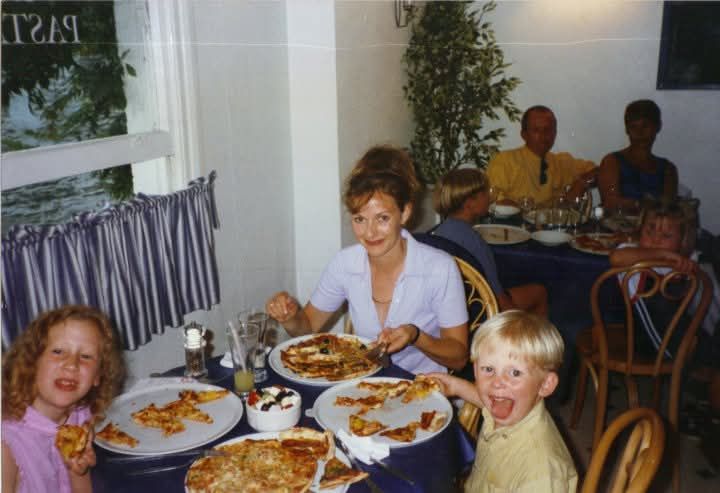
    Me, my brother and mum 1996

    My mum used to say, “Use your manners, let’s pretend we’re eating at the Queen’s house.” My brother and I would sit up straight, pinkies raised as we sipped our drinks, fully committed to the idea that we were in royal company. It was simple, a bit silly—but it made those moments feel special, and they’ve stayed with me.

    My dad was always the one encouraging us to be brave with food—especially seafood. On holidays, he’d show us how to peel prawns or debone fish. Things that might make some children squirm somehow fascinated us. It turned meals into little adventures and made trying new things feel exciting rather than intimidating.

    Of course, it would be naïve to think we can eliminate screens from our children’s lives completely. The world is digital, and they need to be confident using technology. Screens can educate, inspire, and support learning—so rather than seeing them as a hindrance, it’s more helpful to think of them as tools. Tools we can pick up and put down with intention. Teaching children that balance is invaluable.

    But what we shouldn’t do is let devices replace human interaction. Let them experience the world—and see you experiencing it with them. Bring them along with you, share what you love, and show them the world through real experiences. Accept that things will look different with children in tow. Swap long, uninterrupted dinners for noise, laughter, mess, and the occasional meltdown.

    Dining Out Without Screens

    If you’re heading out for a meal with children, it helps to reset your expectations. A calm, uninterrupted dinner might not be realistic—and that’s okay.
    Restaurants are full of stimulation: new faces, sounds, lighting, music, and décor. It’s natural for children to want to explore. Let them. Follow their lead (safely), show them things, and embrace their curiosity.

    Here are a few things that help us when dining out as a family:

    Come prepared
    Pack small activities—toys, colouring, or fidget items. They’re great for keeping little hands busy while waiting for food.

    Choose your timing wisely
    Avoid booking too late, especially for evening meals. Tired children and long waits rarely mix well. Earlier sittings are often quieter and quicker.

    Make the table interactive
    Play simple games like “What can you see?” or “What can you smell?” Tailor it to your children’s ages—we have a one-year-old and a ten-year-old, so creativity is key!

    Let them explore
    With younger children, take a walk around. Let them get familiar with the space, say hello, and practise simple manners like smiling, waving, and saying “please” and “thank you.”

    Give older children responsibility
    Encourage them to read the menu, choose their meal, and even order it themselves. It builds confidence and independence.

    Share food
    Ordering picky bits or tapas-style dishes makes it easier for everyone to try new things. It also works well when meals are interrupted by the occasional wander.

    Take turns
    If there are two of you, swap roles—one engages with the children while the other gets a moment to sit and relax.
    Follow their energy
    Let them move, laugh, and explore. Children mirror your mood—if you’re stressed, they’ll feel it too.

    Pause and take it in
    Every now and then, sit back, sip your drink, and soak it all up. These are the moments they’ll remember. Be sure to cheers with your family too! Every outing should be celebrated.

    A Gentle Reminder

    It’s also important to remember that every family is different. It’s easy to look around and make quiet judgements when you see children with screens at the table or on outings—but the truth is, you don’t know their reasons or their circumstances. Focus on your own family, your own values, and what works for you. And be kind—to others and to yourself. The world needs more of that.

    When It Doesn’t Go to Plan

    Sometimes it won’t. There might be tears, tantrums, or food everywhere. You might find yourself crawling under the table, quietly cleaning up the aftermath. But that’s part of it.

    Consistency is key.

    Choosing to leave devices behind during family outings creates space for connection. The more you go screen free, the more it becomes the norm. Your children will look back on the moments you spent together and thank you.

    The Bit That Matters Most

    One day, these dinners won’t be noisy. There’ll be no crayons rolling off the table, no little voices asking a hundred questions, no tiny hands reaching for yours. And you won’t remember the meals where everything went perfectly—you’ll remember the ones filled with laughter, chaos, and connection. So leave the screens behind when you can. Be present. Let them explore, make a mess, ask questions, and be part of your world.
    Because that’s where the magic is.
  • Fascia & Burnout: Simple Resets

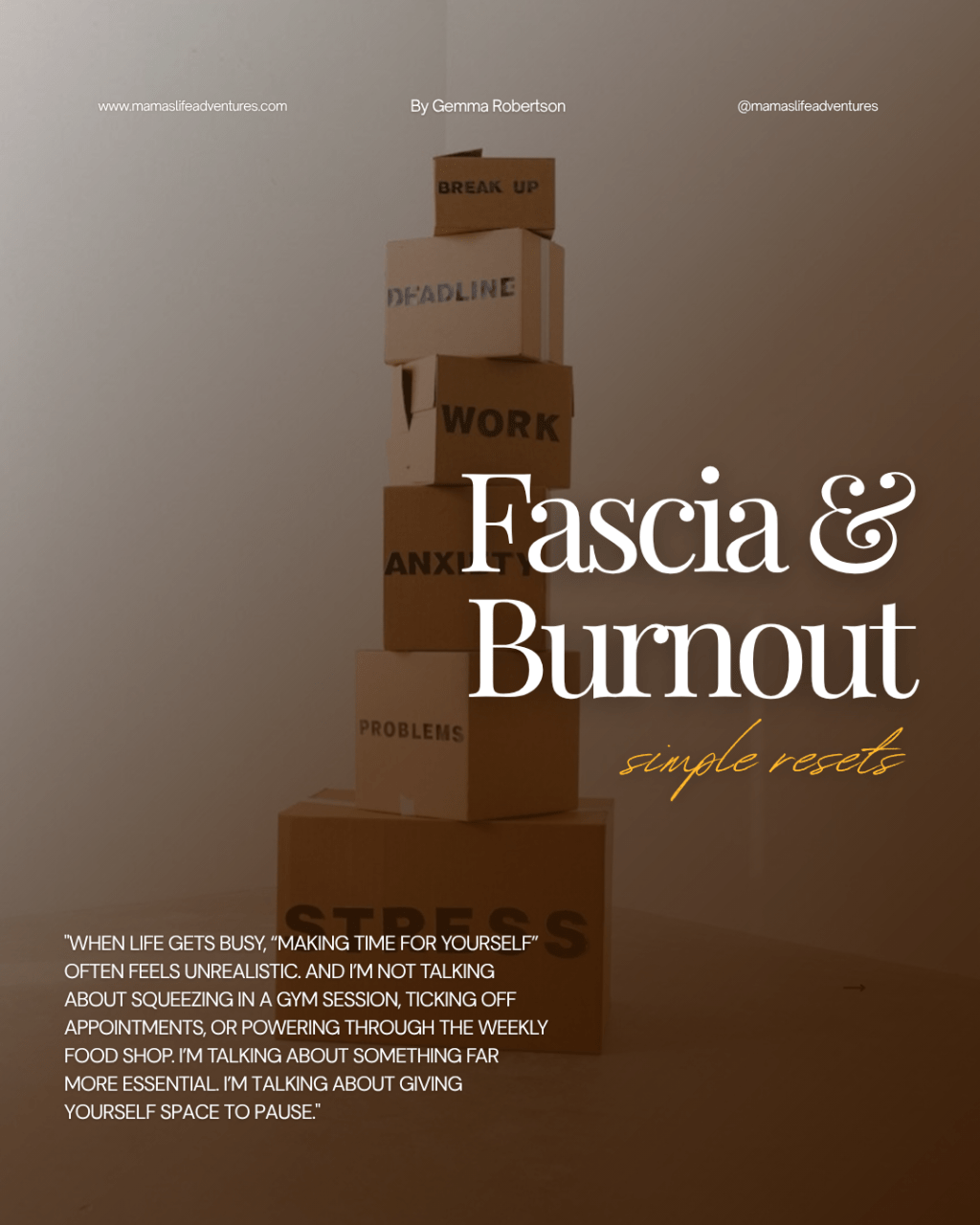
    Fascia & Burnout: Simple Resets

    We’ve all been there—running on empty after weeks (or months) of constantly being on the go. The mental load, the physical exhaustion, the never-ending to-do list. I’m feeling it now too—that quiet but persistent sense that burnout is just around the corner.


    When life gets busy, “making time for yourself” often feels unrealistic. And I’m not talking about squeezing in a gym session, ticking off appointments, or powering through the weekly food shop. I’m talking about something far more essential.
    I’m talking about giving yourself space to pause.


    Moments to reset your nervous system.


    Moments to let your mind soften.


    Moments to allow your body to fully relax and regenerate.


    This doesn’t require spa days or extra hours of sleep (though those are always a bonus when they happen). It’s about small, intentional practices—deep breathing, stillness, gentle awareness—that help your body come out of survival mode and return to balance.

    The Fascia


    Let’s talk about something we don’t often think about: fascia.
    What’s that, you ask?

    Fascia is a continuous web of connective tissue that runs throughout your entire body. It’s quite incredible—it wraps around your muscles, organs, bones, and nerves, holding everything in place while also allowing movement and flexibility.

    Think of it as both your body’s support system and its communication network. When you’re stressed, physically or emotionally—your fascia can tighten and become restricted. This can lead to stiffness, discomfort, fatigue, and that heavy, “worn down” feeling so many of us carry without even realising it. Many people can relate to this, and as a parent, exhaustion is certainly not a foreign concept.

    Fascia is also closely linked to your nervous system. When you’re stuck in a constant state of stress (fight or flight), your fascia reflects that tension. It becomes less elastic, less hydrated, and less able to support easeful movement and recovery.


    The good news? Fascia responds beautifully to slow, mindful practices. Gentle movement, deep breathing, and moments of stillness can help rehydrate and release this tissue, sending signals of safety back to your nervous system.

    In short—when you look after your fascia, you’re supporting your entire body to feel calmer, lighter, and more resilient.


    3 Steps to Reset


    When everything feels overwhelming, keep it simple. Resetting doesn’t have to be complicated or time-consuming. It’s something you can even practise with your children.


    1. Breathe with intention
    Take 2–3 minutes to slow your breath right down. Inhale through your nose for a count of four, then exhale slowly for a count of six. That longer exhale tells your nervous system that you’re safe, helping you shift out of stress mode.


    2. Create a moment of stillness
    This could be sitting quietly with a cup of tea, stepping outside for fresh air, or simply closing your eyes for a minute in the middle of the chaos. No phone, no distractions—just a pause.


    3. Gently move your body
    Slow stretches, rolling your shoulders, or even lying on the floor for a minute can help release tension held in the body. Think softness, not intensity.

    A Note on Somatic Movement


    One of the most supportive practices I’ve brought into my own routine is somatic movement—slow, intentional movement that helps you reconnect with your body and release stored tension.


    Each morning, while the coffee machine does its thing, I move. It doesn’t need to be complicated. I start with 100 jumps to wake up my body, followed by a few simple, intuitive movements and stretches. Nothing structured, nothing forced—just tuning in to what my body needs.


    It’s become a small but powerful reset. A way to shake off tension, support my fascia, and signal to my nervous system that I’m safe and grounded before the day begins.


    I’ll write a separate blog post diving deeper into somatic movement because, truly, it’s changed so much for me day to day and improved my overall wellbeing.

    How to Make Time Each Day to Prevent Burnout


    This is often the hardest part—finding the time when it already feels like there isn’t any. The key is to stop thinking of this as “extra” time. Instead, weave it into what you’re already doing:
    Take a few deep breaths before getting out of bed, pause for a moment of stillness while the kettle boils. Move your body while you make the kids breakfast. Dance your way out of the door on the school run. Step outside for fresh air, even if it’s just for a minute. It’s not about carving out big chunks of time. It’s about creating small pockets of awareness throughout your day. And just as importantly—give yourself permission.


    Permission to pause.


    Permission to not be productive for a moment.


    Permission to look after yourself in a way that truly supports your nervous system.


    Because when you take even a few minutes to reset, you’re not taking away from your family—you’re showing up for them in a more grounded, present, and energised way.


    Burnout doesn’t happen overnight—and neither does recovery. But these small, consistent moments of care? They add up! And they matter more than you think.

  • Present, Not Perfect: A Mindful Approach to Parenthood

    Present, Not Perfect: A Mindful Approach to Parenthood

    Mindfulness — it’s a word that’s become pretty trendy lately, right?

    It seems like there’s a bit of a stigma around calling yourself a mindful person these days. As if saying you’re a mindful mother (or parent) means people expect you to bake only organic goods, wear dungarees, have an allotment (I actually did have one once, and I definitely own a pair of dungarees, but still! 🤣), and never drop the F-bomb or enjoy a few too many glasses of wine.

    I’m here to tell you — that’s a load of rubbish and quite frankly, unrealistic.

    So, What Is Mindfulness, Really?

    Photo credit – Google

    At its core, mindfulness is simply about being aware — noticing what’s happening inside and around you without judgment. And that’s something anyone can do with practice.

    The kids have dropped food all over the floor, everyone’s screaming and overstimulated? Take a deep breath and remind yourself: we’re all just tiny humans living on a floating rock in space. That’s mindfulness.

    Chasing your kids through the forest, covered in mud, trying to stop your youngest from eating rocks — then taking a moment to stop, look around, breathe in the fresh air, and feel grateful for the beauty around you. That’s mindfulness.

    Taking time out for yourself — whether it’s yoga, the gym, a walk in nature, dinner with friends, or even a Netflix binge in your pajamas with snacks — and allowing yourself to reconnect and unwind. That’s mindfulness too.

    How to Practice Mindfulness

    There are so many ways to bring mindfulness into your day, but it often starts with something as simple as pausing in a moment of overwhelm.

    Take a breath.

    Meet whatever’s happening with steadiness and kindness.

    Doing this regularly helps rewire your brain, creating new neural pathways that make it easier to stay grounded and aware of your emotions.

    Whatever you’re feeling — anger, sadness, joy, gratitude — let yourself feel it. All of it. Feeling is what makes us human.

    Nobody’s Perfect

    And let’s be real — nobody gets it right all the time. I certainly don’t! My mindfulness practice escapes me sometimes. I get angry. I shout. I cry. Sometimes I go inward and struggle to express myself.

    But those moments are exactly when I realise I need a time out — a mindful pause — a break from my thoughts. I take a step back, breathe, reevaluate, and try to meet whatever I’m feeling with patience and understanding.

    A Final Thought

    If the idea of mindfulness feels a bit unrealistic or even frustrating, that’s okay. It can sound like one more thing to add to an already overflowing plate — especially as a parent.

    But mindfulness isn’t about perfection or pretending everything’s fine. It’s about giving yourself a little space to breathe, reflect, and approach your day with a clearer mind and softer heart.

    So next time things feel chaotic, take a mindful moment for yourself.

    Pause.

    Breathe.

    And remember — you don’t need to be perfect to be present. 🙏✨️