Tag: selfcare

  • Showing Up — For Yourself

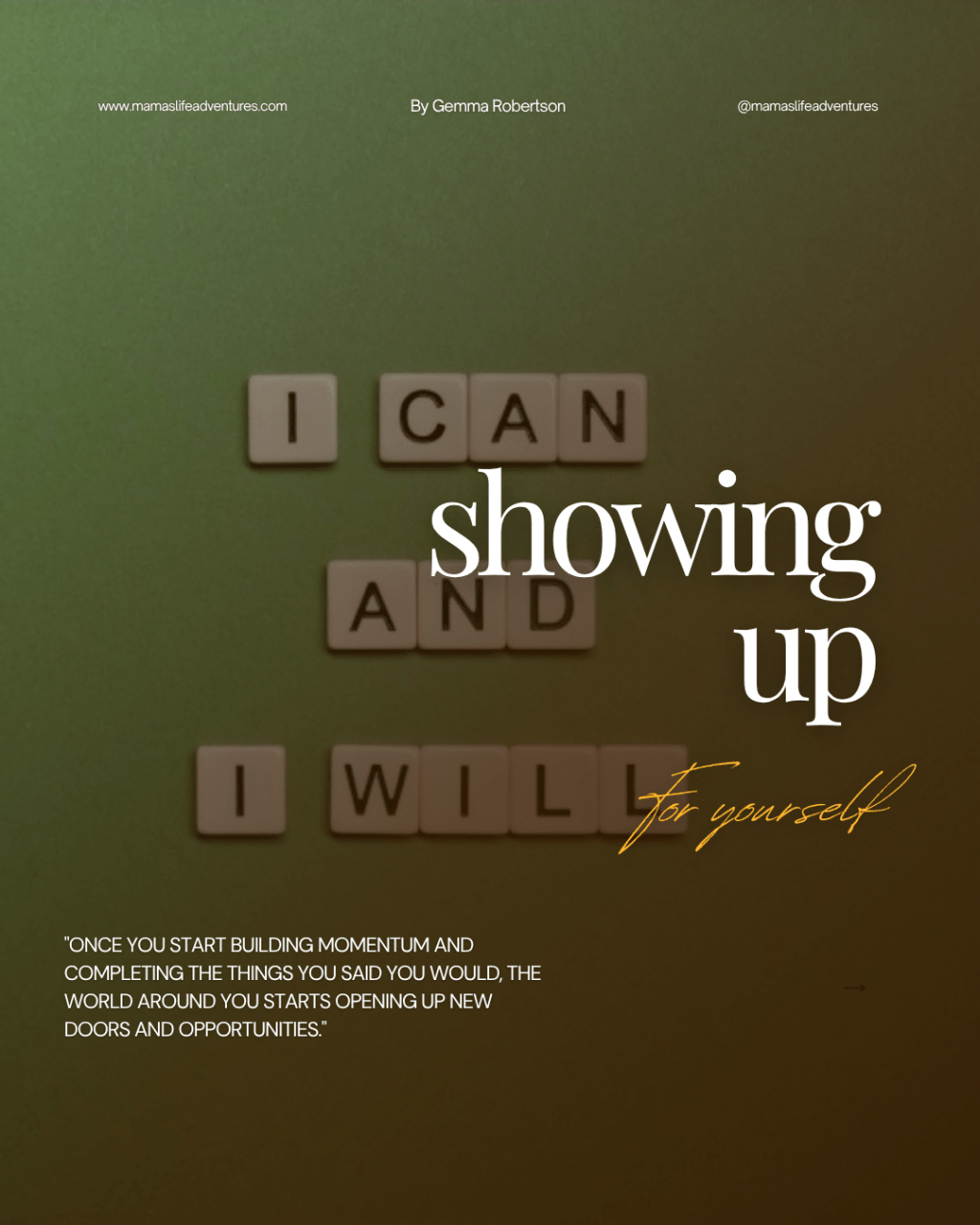
    Showing Up — For Yourself

    It’s so easy to get wrapped up in your own life — the daily tasks, the appointments, school clubs, family birthdays, and whatever else life throws at us. But when was the last time you actually did something for yourself? Just for you?

    I’m not talking about the small things this time (self care etc) I mean something more — goals, a challenge, a qualification, or simply something that gives you a sense of self achievement.

    In the last year, I’ve really felt a shift in my sense of purpose since I started working towards things that make me feel good. My graduation was an emotional turning point. It filled me with pride and was definitely a “pinch me” moment when I walked across that stage in London to collect my graduate scroll.

    More recently, I’ve started to run. Running has opened up a whole new world for me — one with no limitations — where I’ve started pushing my body and mind to places I never thought possible. Squeezing in runs around family life and work commitments hasn’t been easy, but I’ve made it work somehow. I think it really comes down to mindset and discipline when it comes to exercise and goal setting. Getting it done feels good, but getting to it can be hard. You have to push past the “I don’t want to,” because on the other side, you’ll find “I’m glad I did that.”

    Today, I’m sitting here after completing my first half marathon this weekend, and I feel completely alive. Whether that’s a runner’s high, I don’t know — but I can definitely feel a change in myself. The need for more just grows with every goal I surpass.

    And those goals? They don’t have to be huge. Big or small — a goal’s a goal, right?

    Some days I think, “I’d really like to paint something,” so I do — goal achieved.

    Some days I think, “I’m going to rearrange my living room,” so I do — goal achieved.

    Some days I think, “I fancy booking a 21k race and running it,” so I do — goal achieved.

    The pattern here isn’t the goal itself — it’s the doing.

    You could set yourself a list of goals that are amazing to have, but unless you start ticking off the smaller ones, the big ones just feel out of your reach — and that can set you up to fail before you’ve even started.

    Life is short. If you want to do something, do it.

    I understand that things can get in the way of your goals — money, time, resources. So be realistic. Don’t set yourself up with something completely out of reach. Set goals that, deep down, you know you can achieve with a bit of blood, sweat, and tears.

    Because who knows? Once you start building momentum and completing the things you said you would, the world around you starts opening up new doors and opportunities.

    Create the life you want. Don’t sit back and wait for things to happen — make them happen.

    Do it for yourself. Because when you start showing up for yourself, you show up better for your family too. You bring more positivity, more confidence, and you set an example for others who might be waiting for their moment to start.

    Maybe this is it.

  • Fascia & Burnout: Simple Resets

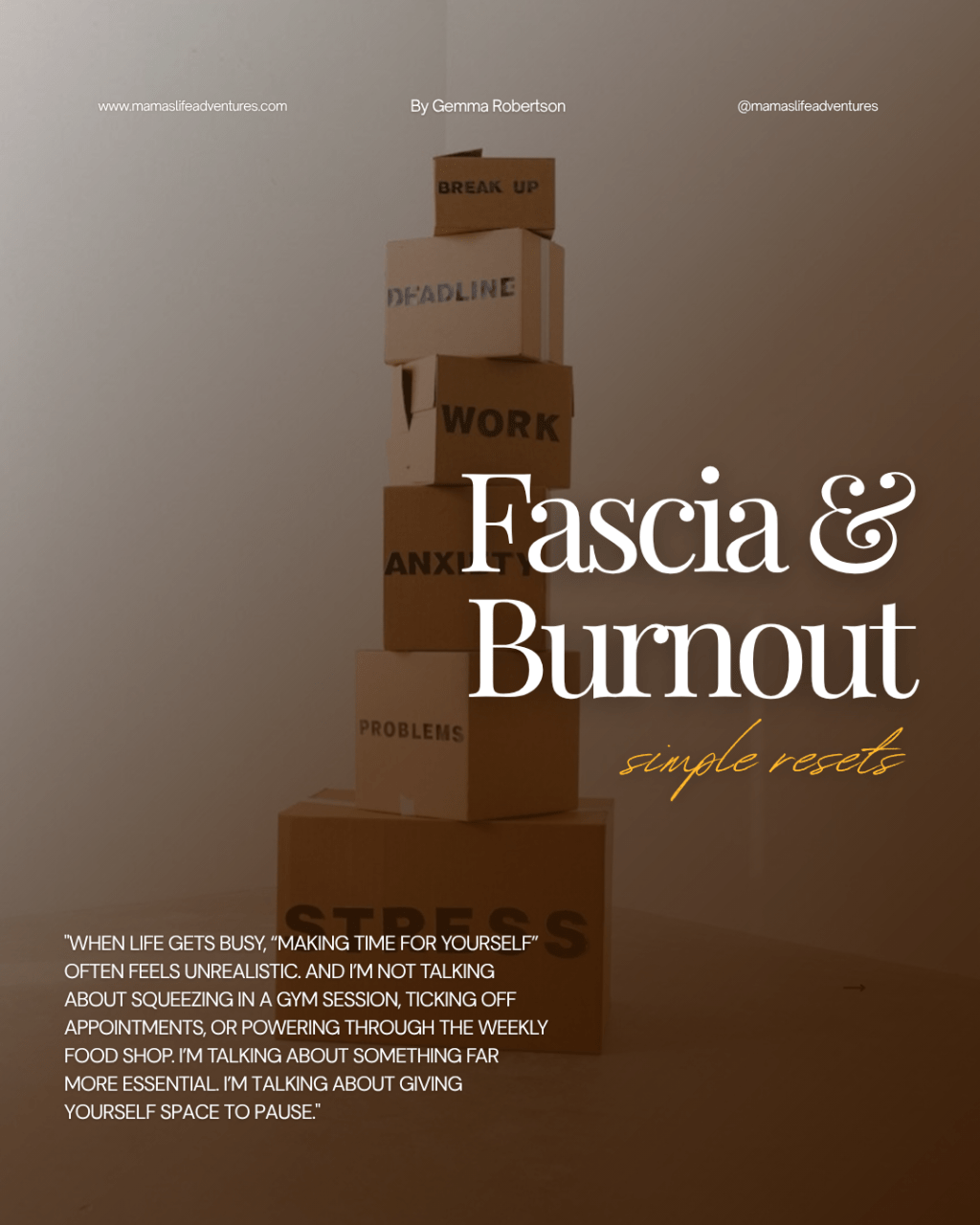
    Fascia & Burnout: Simple Resets

    We’ve all been there—running on empty after weeks (or months) of constantly being on the go. The mental load, the physical exhaustion, the never-ending to-do list. I’m feeling it now too—that quiet but persistent sense that burnout is just around the corner.


    When life gets busy, “making time for yourself” often feels unrealistic. And I’m not talking about squeezing in a gym session, ticking off appointments, or powering through the weekly food shop. I’m talking about something far more essential.
    I’m talking about giving yourself space to pause.


    Moments to reset your nervous system.


    Moments to let your mind soften.


    Moments to allow your body to fully relax and regenerate.


    This doesn’t require spa days or extra hours of sleep (though those are always a bonus when they happen). It’s about small, intentional practices—deep breathing, stillness, gentle awareness—that help your body come out of survival mode and return to balance.

    The Fascia


    Let’s talk about something we don’t often think about: fascia.
    What’s that, you ask?

    Fascia is a continuous web of connective tissue that runs throughout your entire body. It’s quite incredible—it wraps around your muscles, organs, bones, and nerves, holding everything in place while also allowing movement and flexibility.

    Think of it as both your body’s support system and its communication network. When you’re stressed, physically or emotionally—your fascia can tighten and become restricted. This can lead to stiffness, discomfort, fatigue, and that heavy, “worn down” feeling so many of us carry without even realising it. Many people can relate to this, and as a parent, exhaustion is certainly not a foreign concept.

    Fascia is also closely linked to your nervous system. When you’re stuck in a constant state of stress (fight or flight), your fascia reflects that tension. It becomes less elastic, less hydrated, and less able to support easeful movement and recovery.


    The good news? Fascia responds beautifully to slow, mindful practices. Gentle movement, deep breathing, and moments of stillness can help rehydrate and release this tissue, sending signals of safety back to your nervous system.

    In short—when you look after your fascia, you’re supporting your entire body to feel calmer, lighter, and more resilient.


    3 Steps to Reset


    When everything feels overwhelming, keep it simple. Resetting doesn’t have to be complicated or time-consuming. It’s something you can even practise with your children.


    1. Breathe with intention
    Take 2–3 minutes to slow your breath right down. Inhale through your nose for a count of four, then exhale slowly for a count of six. That longer exhale tells your nervous system that you’re safe, helping you shift out of stress mode.


    2. Create a moment of stillness
    This could be sitting quietly with a cup of tea, stepping outside for fresh air, or simply closing your eyes for a minute in the middle of the chaos. No phone, no distractions—just a pause.


    3. Gently move your body
    Slow stretches, rolling your shoulders, or even lying on the floor for a minute can help release tension held in the body. Think softness, not intensity.

    A Note on Somatic Movement


    One of the most supportive practices I’ve brought into my own routine is somatic movement—slow, intentional movement that helps you reconnect with your body and release stored tension.


    Each morning, while the coffee machine does its thing, I move. It doesn’t need to be complicated. I start with 100 jumps to wake up my body, followed by a few simple, intuitive movements and stretches. Nothing structured, nothing forced—just tuning in to what my body needs.


    It’s become a small but powerful reset. A way to shake off tension, support my fascia, and signal to my nervous system that I’m safe and grounded before the day begins.


    I’ll write a separate blog post diving deeper into somatic movement because, truly, it’s changed so much for me day to day and improved my overall wellbeing.

    How to Make Time Each Day to Prevent Burnout


    This is often the hardest part—finding the time when it already feels like there isn’t any. The key is to stop thinking of this as “extra” time. Instead, weave it into what you’re already doing:
    Take a few deep breaths before getting out of bed, pause for a moment of stillness while the kettle boils. Move your body while you make the kids breakfast. Dance your way out of the door on the school run. Step outside for fresh air, even if it’s just for a minute. It’s not about carving out big chunks of time. It’s about creating small pockets of awareness throughout your day. And just as importantly—give yourself permission.


    Permission to pause.


    Permission to not be productive for a moment.


    Permission to look after yourself in a way that truly supports your nervous system.


    Because when you take even a few minutes to reset, you’re not taking away from your family—you’re showing up for them in a more grounded, present, and energised way.


    Burnout doesn’t happen overnight—and neither does recovery. But these small, consistent moments of care? They add up! And they matter more than you think.

  • Finding Your Flow — In Life and Motherhood

    Finding Your Flow — In Life and Motherhood

    For the longest time, I resisted the idea of a “routine.”

    The word itself felt heavy. Rigid. Restrictive. Like something that would box me in and drain the joy out of my days. I imagined a strict timeline from morning to night — a checklist that had to be completed perfectly or not at all. And so, without really realising it, I avoided it.

    Instead, I rolled through my days. Winging it. Reacting rather than planning. Some days felt fine, but many felt overwhelming — like I was constantly playing catch-up without ever quite getting there.

    But over time, my understanding of routine began to shift.

    I realised it isn’t about rigid schedules or perfectly timed days. It’s not about ticking off endless tasks. A routine, at its core, is simply a collection of small, familiar habits that create a sense of flow.

    And flow feels very different to pressure.

    Routine vs Flow

    When you think about your day, try to let go of timestamps.

    Instead, ask yourself:

    How do I want my day to feel?

    Routine doesn’t have to mean:

    Wake up at 6:00

    Breakfast at 7:15

    Laundry at 9:00

    It can simply mean:

    We wake, we ease into the morning

    We eat, we tidy, we move

    One thing leads gently into the next

    It’s less about structure and more about rhythm.

    A soft outline rather than a strict plan.

    Let It Bend

    Flexibility is where the magic happens.

    There will be days when things don’t go to plan — and that’s not failure, that’s life.

    I always come back to the 80/20 approach:

    Be consistent 80% of the time, and let the other 20% be for living.

    Go out for dinner with your children.

    Let bedtime run a little later.

    Let the washing wait some days — it will always be waiting for you, whether you like it or not.

    Skip the workout if the day feels full — your body will be okay, and if you’re consistent with your exercise overall, it will actually relish the rest.

    Those moments? They matter just as much.

    Because this isn’t about building a perfect life — it’s about building a real one.

    You Make the Rules

    It’s so easy to look around and feel like you’re not doing enough.

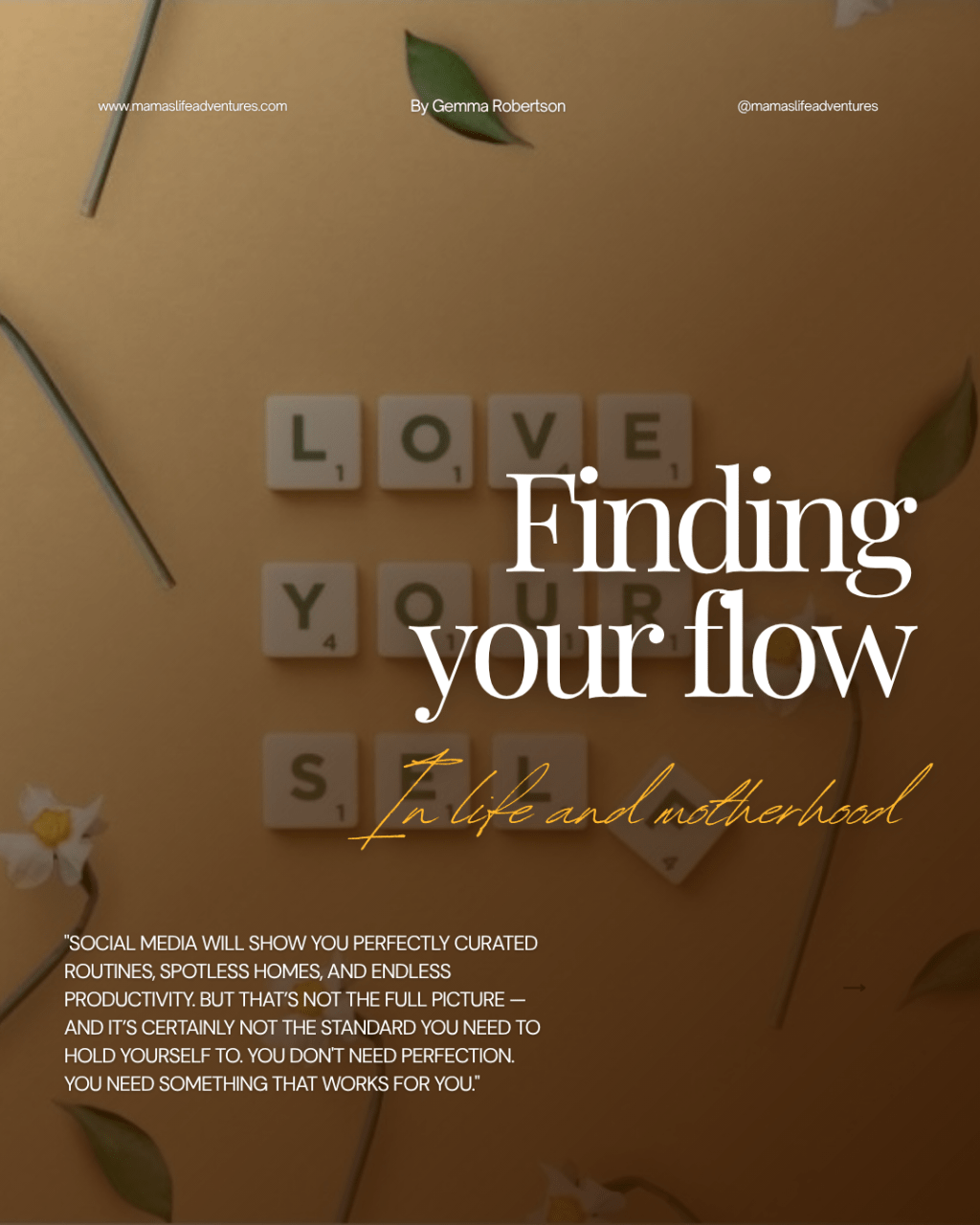
    Social media will show you perfectly curated routines, spotless homes, and endless productivity. But that’s not the full picture — and it’s certainly not the standard you need to hold yourself to.

    You don’t need perfection.

    You need something that works for you.

    So:

    Don’t compare

    Don’t overload your days

    Don’t chase unrealistic expectations

    Instead:

    Be kind to yourself

    Leave space to breathe

    Allow room for change

    Habits That Hold You

    It’s the small, repeated things that shape your days — not the big, occasional ones.

    Create habits that support you, not exhaust you.

    Keep a clean home, not an immaculate one.

    Move your body, but don’t push it to burnout.

    Drink enough water — your children are always watching.

    Sit down and eat together when you can.

    One day, the house will feel quieter.

    Bath and bed your children — but don’t rush through it.

    These are the moments that pass the quickest.

    And somewhere in the middle of it all, do something for yourself too.

    Even something small.

    Because you matter in this life as well.

    Live In Your Life

    It’s so easy to fall into the trap of living for the end of the to-do list.

    “I’ll relax when everything’s done.”

    “I’ll enjoy the day once I’ve caught up.”

    But the truth is — the list never really ends.

    There will always be more to do.

    So instead of living for the finish line, try living within it.

    Fold the laundry, but notice the quiet.

    Cook the dinner, but enjoy the chatter.

    Run the bath, but soak in the laughter.

    Your life isn’t waiting on the other side of productivity.

    It’s happening right now — in the middle of the ordinary, everyday things.

    Where it all lands

    Routine doesn’t have to feel like a cage. It can be something gentle, something supportive — a way to carry you through your days with more ease and less overwhelm.

    Find your rhythm. Let it evolve. Let it breathe.

    Because this life you’re living — the messy, beautiful, everyday of motherhood — isn’t something to rush through.

    It’s something to be in.

  • The Quiet Power of Choosing Yourself

    The Quiet Power of Choosing Yourself

    In recent months, there’s been a noticeable shift on social media. Women — especially mothers — are beginning to put themselves first.

    Not in a selfish way, but intentionally. They’re prioritising their wellbeing so they can show up as healthier, more present versions of themselves for their families.

    While no one can operate at 100% all the time, this move towards consistent self-care feels transformative. From solo coffee dates and regular exercise to proper rest and uninterrupted time alone, creating space outside the role of “mum” is finally becoming normalised.

    Because how can we show up well if we’re burnt out and running on empty?


    The Invisible Load


    Many women carry the mental load of family life — the invisible work of planning, organising and anticipating everything:


    The house
    The schedule
    School projects
    Payments
    Clubs
    Meals
    Laundry


    The list never ends. This constant responsibility leaves little room for the person carrying it — unless she intentionally creates that space. And while that isn’t always easy, it’s essential.


    The World Health Organization defines burnout as chronic stress that hasn’t been successfully managed. Motherhood may not be classified as an occupation, but its demands are undeniable. Without recovery, prolonged stress affects not just mood, but physical health, relationships and overall wellbeing.


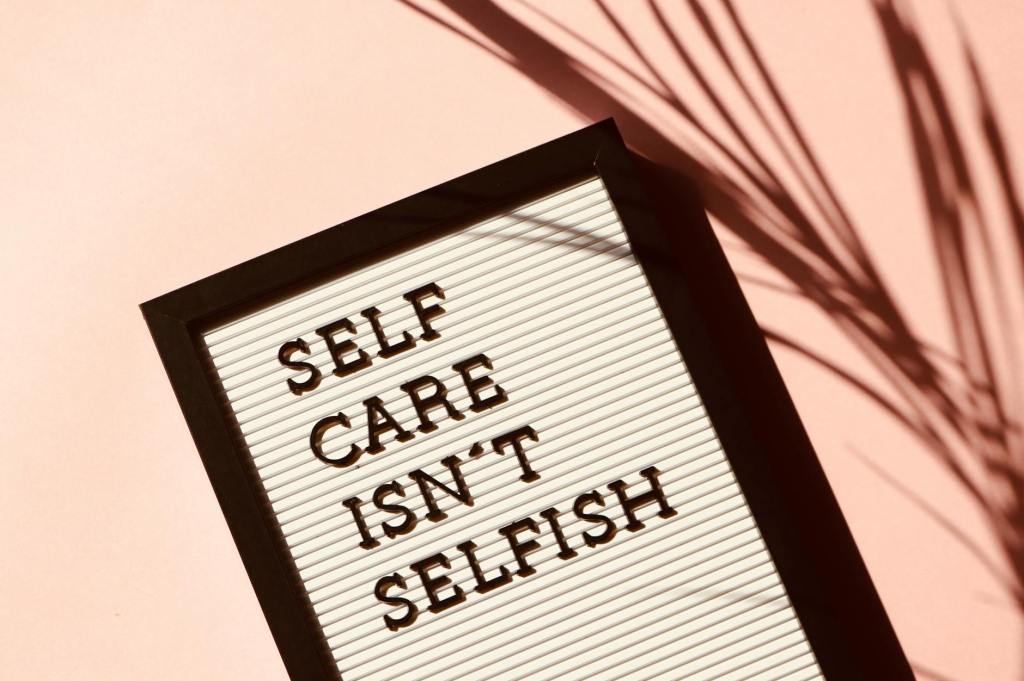
    Self-Care Is Sustainable, Not Selfish


    Research by psychologist Kristin Neff shows that self-compassion leads to greater resilience, emotional balance and overall wellbeing. In short, caring for yourself doesn’t reduce your ability to care for others — it strengthens it.


    One account I particularly love following is a mum who shares this in action: @timewithoutmax

    She regularly takes herself on solo dates and shows how trying new things alone can be a genuinely enjoyable and empowering way to spend your time.


    There’s also a deeper benefit 

    New experiences support neuroplasticity, helping the brain form new connections and stay adaptable.


    What we’re seeing online 

    Women taking solo time, exercising, travelling, or simply sitting alone in a café — isn’t indulgence. It’s maintenance. A quiet reminder: I matter too.
    From Luxury to Necessity
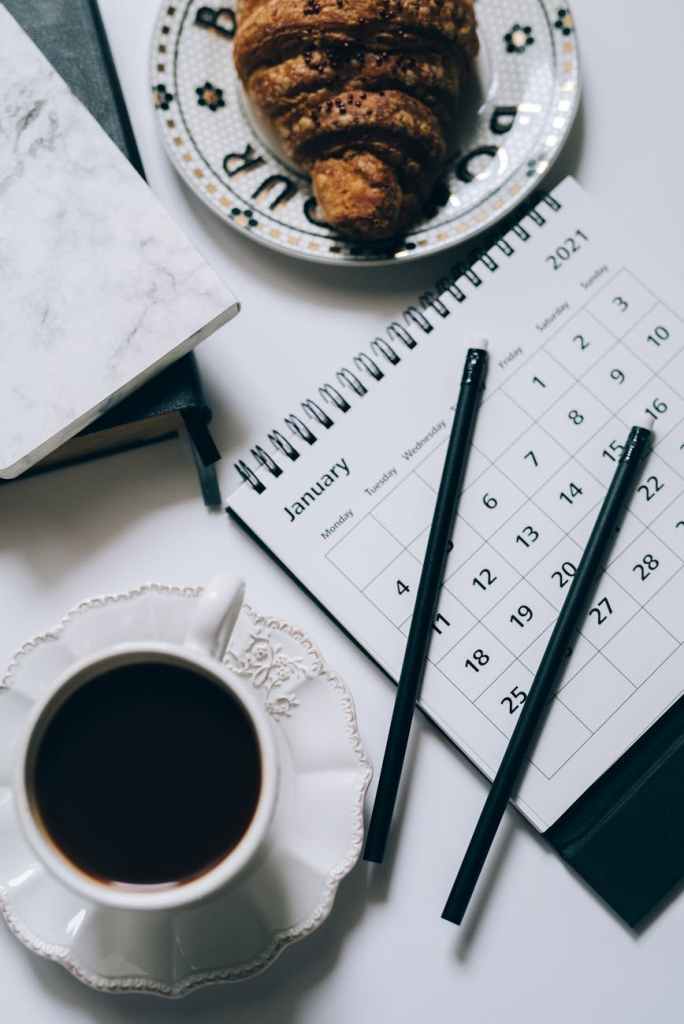
    Self-care shouldn’t be something we squeeze in once everything else is done. What if it was scheduled as deliberately as the weekly shop?


    When it becomes routine, it stops feeling like a luxury and starts feeling essential.
    That might look like:


    A non-negotiable weekly walk or class
    A monthly morning to yourself
    A quarterly reset day
    A solo trip each year
    Even just twenty protected minutes daily

    The key difference? It goes in the calendar first. Because if we wait for spare time, it rarely comes.

    The Ripple Effect


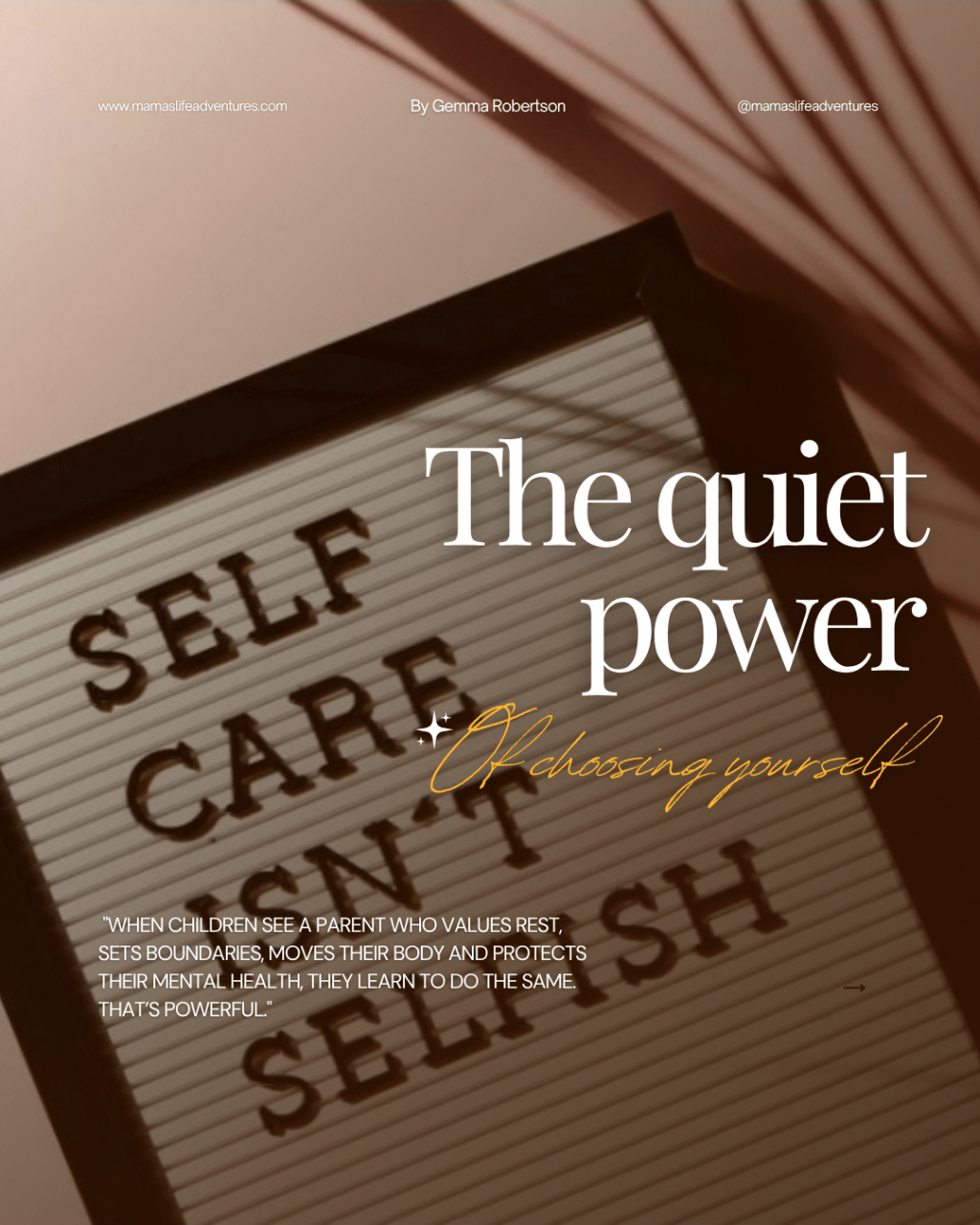
    When children see a parent who values rest, sets boundaries, moves their body and protects their mental health, they learn to do the same. That’s powerful.
    And this shift isn’t just for women. More men are embracing conversations around mental health and rest too. When both parents prioritise wellbeing, the whole family benefits.


    The Quiet Power of Being Alone


    There’s something deeply freeing about time alone. A quiet coffee. A walk without distractions. A moment without demands.
    Doing something simply because you want to — not because it serves anyone else. Not everything needs to be shared or seen to matter. In fact, the most restorative moments often aren’t.


    Whether it’s a small weekly ritual, a monthly reset, or a yearly escape — make it count.
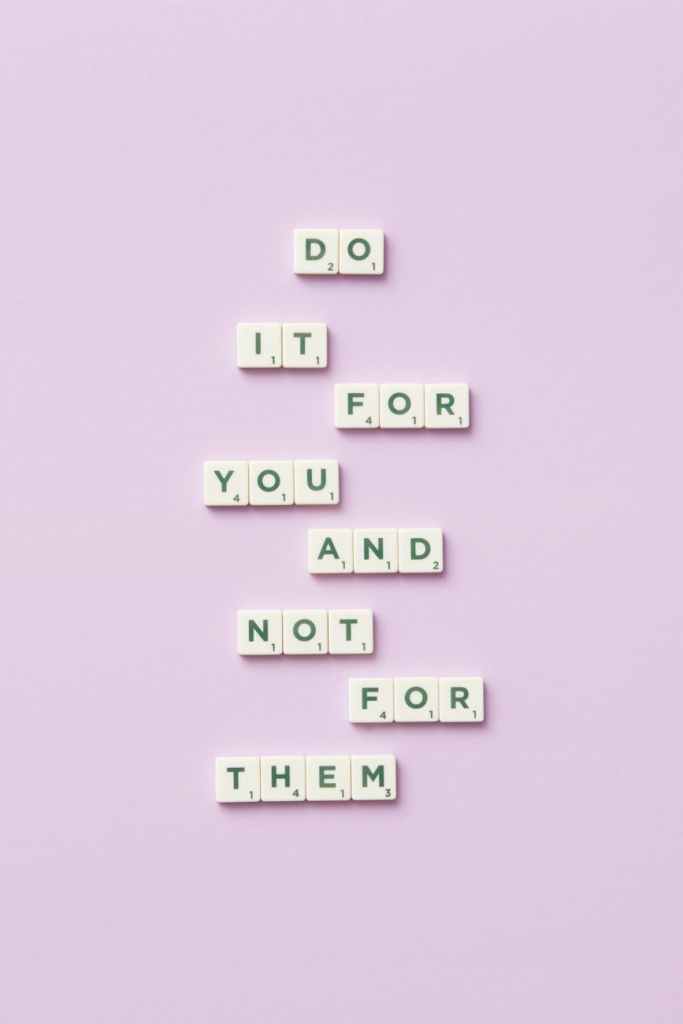
    Do it for you. Not because you’ve earned it. Not because everything else is done. But because you deserve care too.


    References
    Neff, K. (2011). Self-Compassion: The Proven Power of Being Kind to Yourself.
    World Health Organization (2019). Burn-out an “occupational phenomenon” (ICD-11).
    Daminger, A. (2019). The cognitive dimension of household labor. American Sociological Review.
    Poo, A. (2015). The Age of Dignity.
    If you want, I can also format this for Instagram carousel, email newsletter, or your website