If you’ve ever sat in a restaurant, looked around, and noticed how many little faces are lit up by screens instead of conversation—you’re not alone. It’s become the norm, hasn’t it? And with the UK government recently introducing new guidance around children’s screen use, it’s clearly something many of us are thinking about. The advice suggests no screen time at all for children under two (aside from things like video calls), and limiting it to around an hour a day for those aged two to five. It also encourages families to avoid screens during meals and instead focus on interaction—talking, playing, and spending time together. And honestly, that part really resonates with me. Time spent at the table with my family is precious to me.

We’re deep in the digital age. Our children are surrounded by screens whether we like it or not. At home, at school, and almost everywhere in between, as well as seeing adults glued to their phones. While technology has its place, it also has the potential to impact their mental health if we’re not mindful. We know how too much screen time affects us as adults so imagine what it’s doing to a young person’s brain!
As someone born in 1990, I’ve watched technology evolve rapidly. But I was also lucky enough to grow up in a time when screens weren’t part of family gatherings, dinner tables, long journeys, or meals out. Some of my fondest memories are of meals out and holidays with my family—trying new foods, meeting new people, and just being part of the world around me.
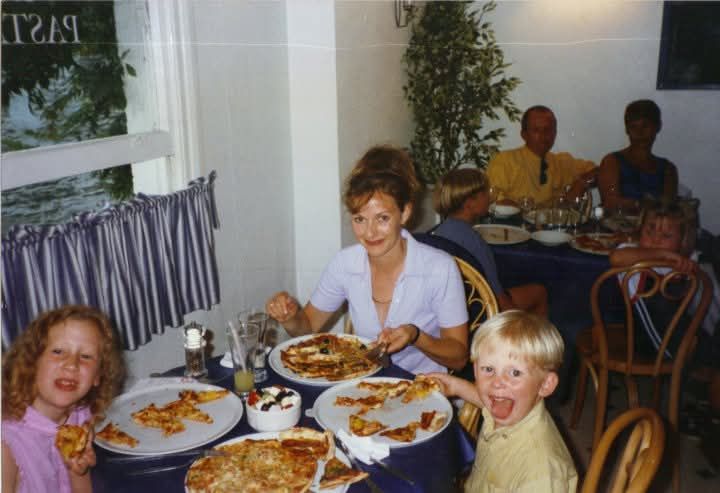
My mum used to say, “Use your manners, let’s pretend we’re eating at the Queen’s house.” My brother and I would sit up straight, pinkies raised as we sipped our drinks, fully committed to the idea that we were in royal company. It was simple, a bit silly—but it made those moments feel special, and they’ve stayed with me.
My dad was always the one encouraging us to be brave with food—especially seafood. On holidays, he’d show us how to peel prawns or debone fish. Things that might make some children squirm somehow fascinated us. It turned meals into little adventures and made trying new things feel exciting rather than intimidating.
Of course, it would be naïve to think we can eliminate screens from our children’s lives completely. The world is digital, and they need to be confident using technology. Screens can educate, inspire, and support learning—so rather than seeing them as a hindrance, it’s more helpful to think of them as tools. Tools we can pick up and put down with intention. Teaching children that balance is invaluable.
But what we shouldn’t do is let devices replace human interaction. Let them experience the world—and see you experiencing it with them. Bring them along with you, share what you love, and show them the world through real experiences. Accept that things will look different with children in tow. Swap long, uninterrupted dinners for noise, laughter, mess, and the occasional meltdown.

Dining Out Without Screens
If you’re heading out for a meal with children, it helps to reset your expectations. A calm, uninterrupted dinner might not be realistic—and that’s okay.
Restaurants are full of stimulation: new faces, sounds, lighting, music, and décor. It’s natural for children to want to explore. Let them. Follow their lead (safely), show them things, and embrace their curiosity.
Here are a few things that help us when dining out as a family:
Come prepared –
Pack small activities—toys, colouring, or fidget items. They’re great for keeping little hands busy while waiting for food.
Choose your timing wisely –
Avoid booking too late, especially for evening meals. Tired children and long waits rarely mix well. Earlier sittings are often quieter and quicker.
Make the table interactive –
Play simple games like “What can you see?” or “What can you smell?” Tailor it to your children’s ages—we have a one-year-old and a ten-year-old, so creativity is key!
Let them explore –
With younger children, take a walk around. Let them get familiar with the space, say hello, and practise simple manners like smiling, waving, and saying “please” and “thank you.”
Give older children responsibility –
Encourage them to read the menu, choose their meal, and even order it themselves. It builds confidence and independence.

Share food –
Ordering picky bits or tapas-style dishes makes it easier for everyone to try new things. It also works well when meals are interrupted by the occasional wander.
Take turns –
If there are two of you, swap roles—one engages with the children while the other gets a moment to sit and relax.
Follow their energy
Let them move, laugh, and explore. Children mirror your mood—if you’re stressed, they’ll feel it too.
Pause and take it in –
Every now and then, sit back, sip your drink, and soak it all up. These are the moments they’ll remember. Be sure to cheers with your family too! Every outing should be celebrated.

A Gentle Reminder
It’s also important to remember that every family is different. It’s easy to look around and make quiet judgements when you see children with screens at the table or on outings—but the truth is, you don’t know their reasons or their circumstances. Focus on your own family, your own values, and what works for you. And be kind—to others and to yourself. The world needs more of that.
When It Doesn’t Go to Plan
Sometimes it won’t. There might be tears, tantrums, or food everywhere. You might find yourself crawling under the table, quietly cleaning up the aftermath. But that’s part of it.
Consistency is key.
Choosing to leave devices behind during family outings creates space for connection. The more you go screen free, the more it becomes the norm. Your children will look back on the moments you spent together and thank you.
The Bit That Matters Most
One day, these dinners won’t be noisy. There’ll be no crayons rolling off the table, no little voices asking a hundred questions, no tiny hands reaching for yours. And you won’t remember the meals where everything went perfectly—you’ll remember the ones filled with laughter, chaos, and connection. So leave the screens behind when you can. Be present. Let them explore, make a mess, ask questions, and be part of your world.
Because that’s where the magic is.
 Mamas life adventures
Leave a comment